Vintage Papers for Letterpress Printing and Collage
I've been asked this question hundreds of times: "Where do you find all those vintage papers?"
It comes up in every workshop and conversation about my art, and I love talking about where I find them. Artists know that part of the joy of being an artist is the materials they use. If you think it’s fun to go to an art store, then you’ll love searching for vintage treasures.
Today, I'm sharing where I find vintage papers, what to look for, and how to build a collection without spending a fortune. What I won't tell you here is what to do with these papers once you have them—that's what I teach in my course launching December 1st. However, first, let's discuss sourcing.
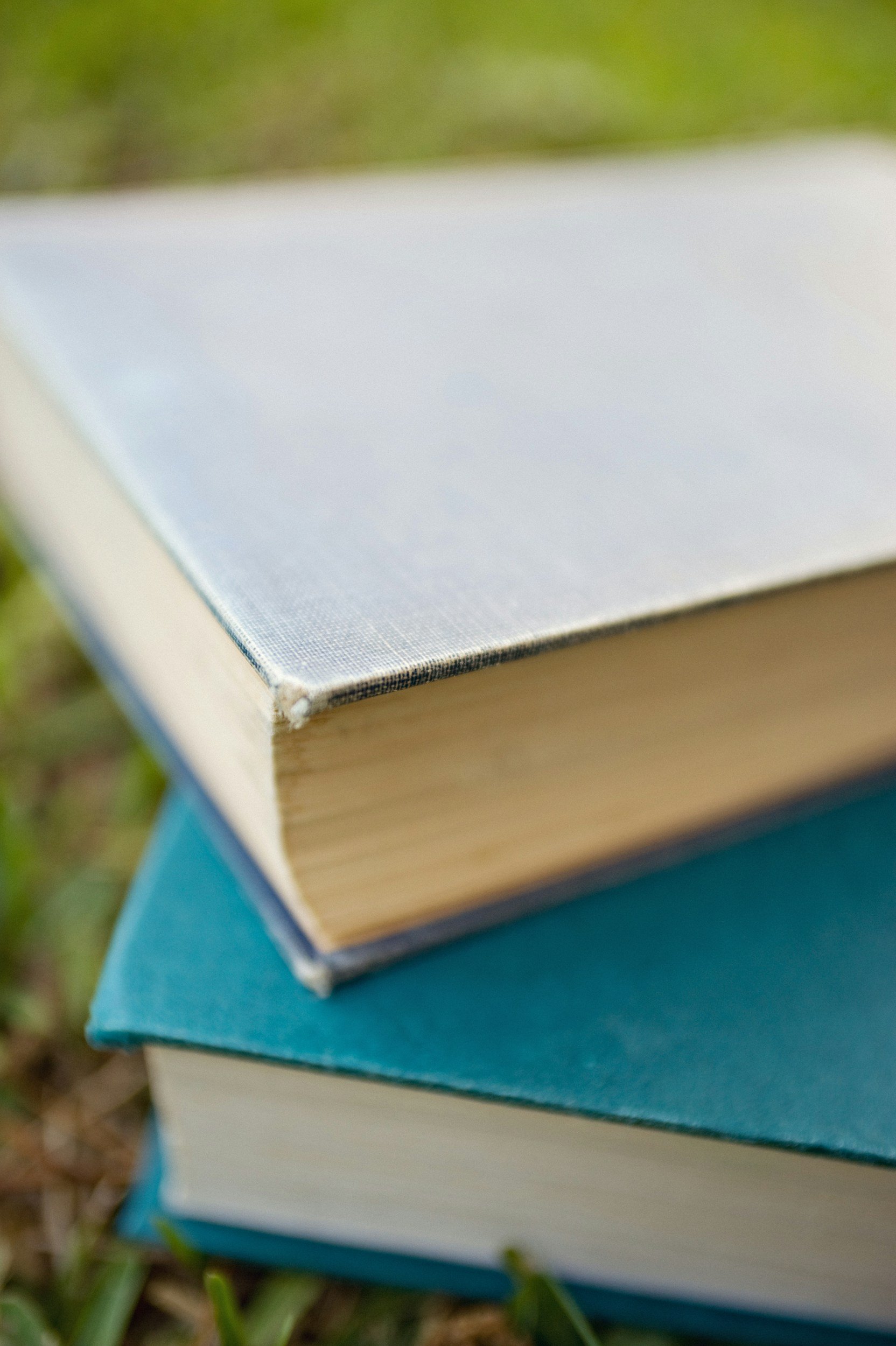
Hardcover Books: Your Best Starting Point
A single hardcover book can yield dozens of papers: text pages, blank pages for printing, decorative endpapers, fabric covers, library pockets with their stamps and history.
Where to Find Them and What to Look For (and Avoid!)
Let friends and family know you're looking for old books they're clearing out. People are often happy to give them to you rather than haul them to a donation center. Library book sales are wonderful! The fill-a-bag for a donation is my favorite summer shopping. Estate sales can be remarkable. Look for sales that mention a book collection in the listing, or zoom in on the images and check the shelves. Search for older books—those published before 1970, and flip through to look for handwriting, papers tucked inside, and stamps.
Please don't destroy valuable or collectible books. If a book is in good condition, is a first edition, or has historical significance, leave it for someone who will treasure it.
Skip books that smell musty or have visible mold.
Books with shiny, coated paper don't work well. The coating prevents paint and medium from adhering correctly.
If you pick up a book and think it's too beautiful to take apart, trust that feeling and start an antique book collection.
Ephemera and Paper Treasures
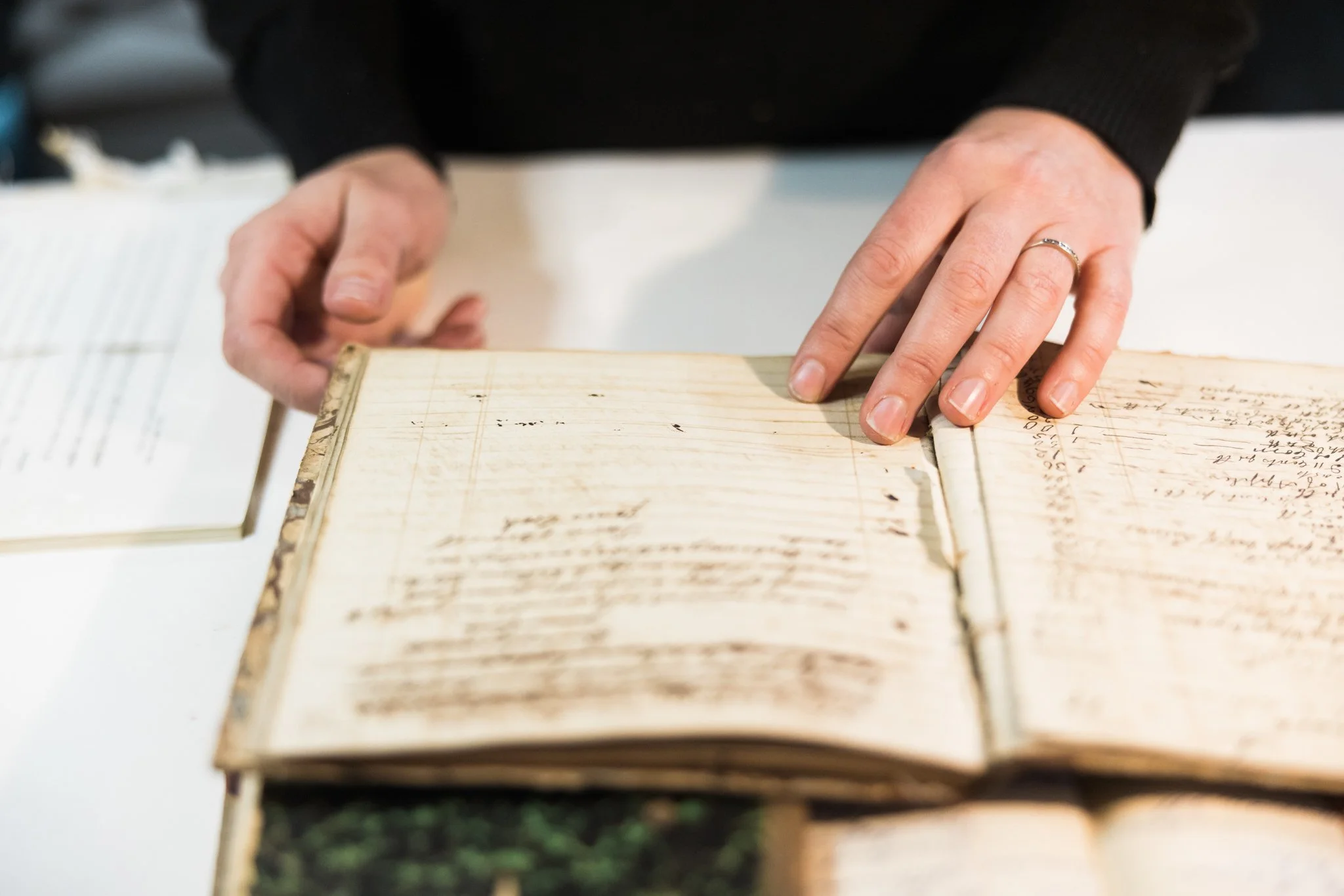
Once you have a collection from books, you can expand into ephemera—paper objects that were created for temporary use but somehow survived.
Where to Find Them and What to Look For
Antique stores and flea markets require patience and digging. Estate sales often have entire drawers of paper goods, including old letters, receipts, and documents. Look to the free sources, like your friends and family, and community 'Buy Nothing' groups on Facebook.
Sheet music is one of my favorites. The typography is beautiful, the paper layers well, and you can find it everywhere.
Old letters and envelopes bring handwriting into your work. Look for interesting postmarks or stamps, or envelopes with beautiful return address typography.
Ledger pages have columns of numbers and grid lines that help with composition.
Vintage maps have beautiful colors, interesting typography, and roads and borders that create natural composition.
Pattern tissue paper from old sewing patterns is thin and translucent, with sizing guides and cutting lines that create interesting marks.
This video features a collection of papers too special to use in collage art.
Storage
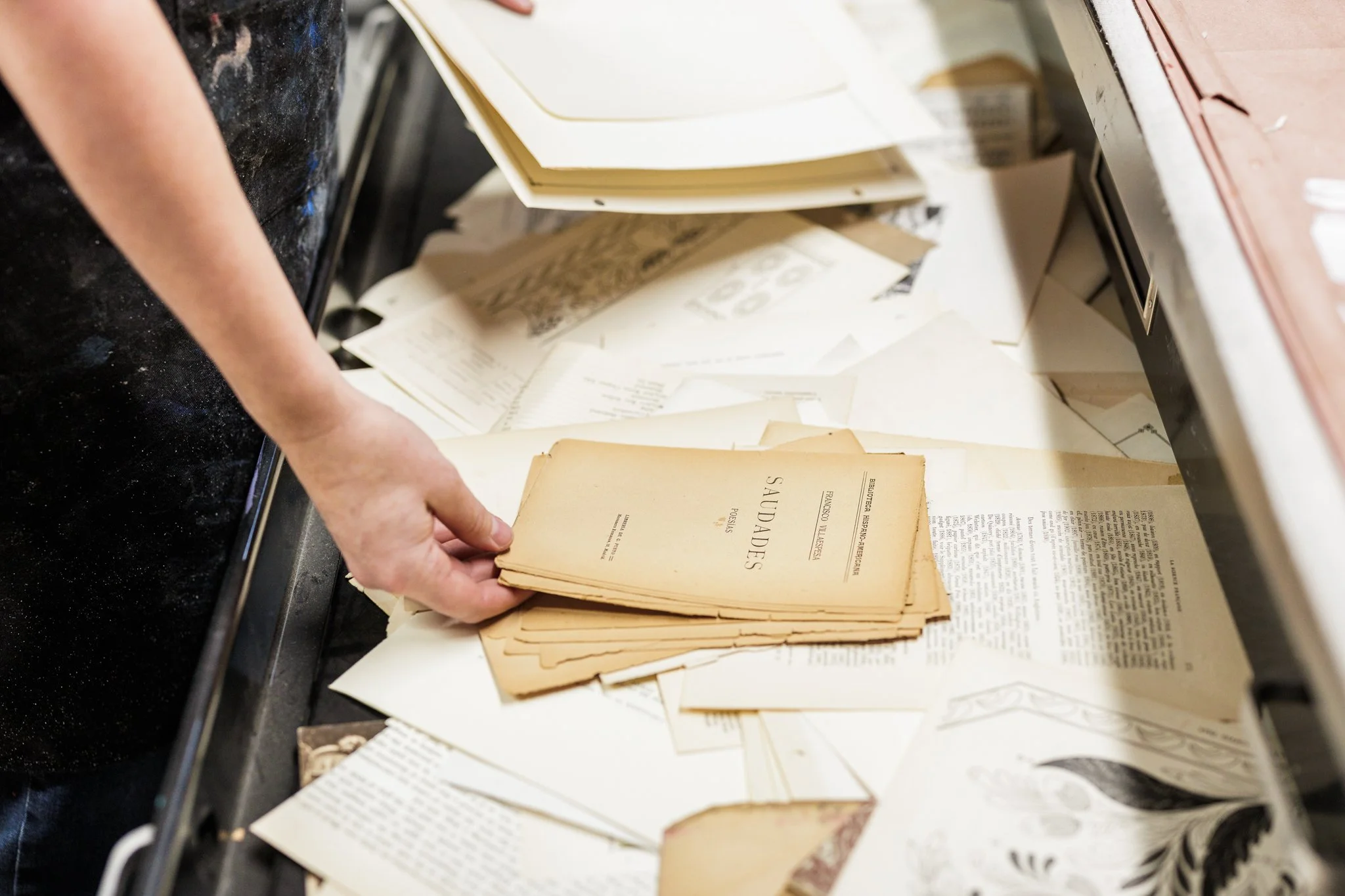
The second most frequently asked question is how to store and organize all these papers.I wish I had a perfectly organized system, but we all know there isn’t one. It changes as your work and collections change.
I sort by type: book pages together, sheet music in one place, ledger papers together, and maps together. Within those categories, things are fairly random. I store them all in flat files, but archival paper storage boxes work well, too, and they take up less space. I used to keep mine under the bed.
Building a Collection
You need less than you think. Five to ten good books will give you months of material, especially when you're learning how you like to work. And quality matters more than quantity; one ledger book with beautiful handwriting is worth more than twenty books of mediocre text.
The real investment is your time. Hunting for papers, sorting through boxes at estate sales, carefully taking apart books—this takes time. But it's part of the creative process for me, and I always get ideas when I organize my papers.
What Comes Next
Now you know where I find vintage papers, what to look for, and how to build a collection.
But this is just the beginning. The real work is learning what to do with these materials once you have them.
That's what I teach in Impressed: Printmaking and Collage.
You'll learn how to print on vintage papers without owning a press. How to combine printed and found papers into compositions that feel cohesive. How to make decisions about color, value, and placement. How to scale from small studies to finished pieces. How to seal and protect your work so these papers last.
The course includes complete printing methods, step-by-step composition guidance, sourcing details beyond what I've shared here, finishing techniques, and a community where you can share your work.
This course teaches you non-traditional letterpress printing and abstract collage from the ground up. You'll learn to source vintage materials, create typography-inspired prints with gelli plates and stencils, and scale your work from small studies to finished pieces on prepared panels. Everything is designed to be accessible—no expensive press required.