Artist’s Daybook: Tuesday
Day 2 in a series of five
A record of my daily practice
4:00 am is much too early to be waking up, but my brain snaps into its "I'm awake, let's start thinking about business" mode, and I know there's no drifting back to sleep now.
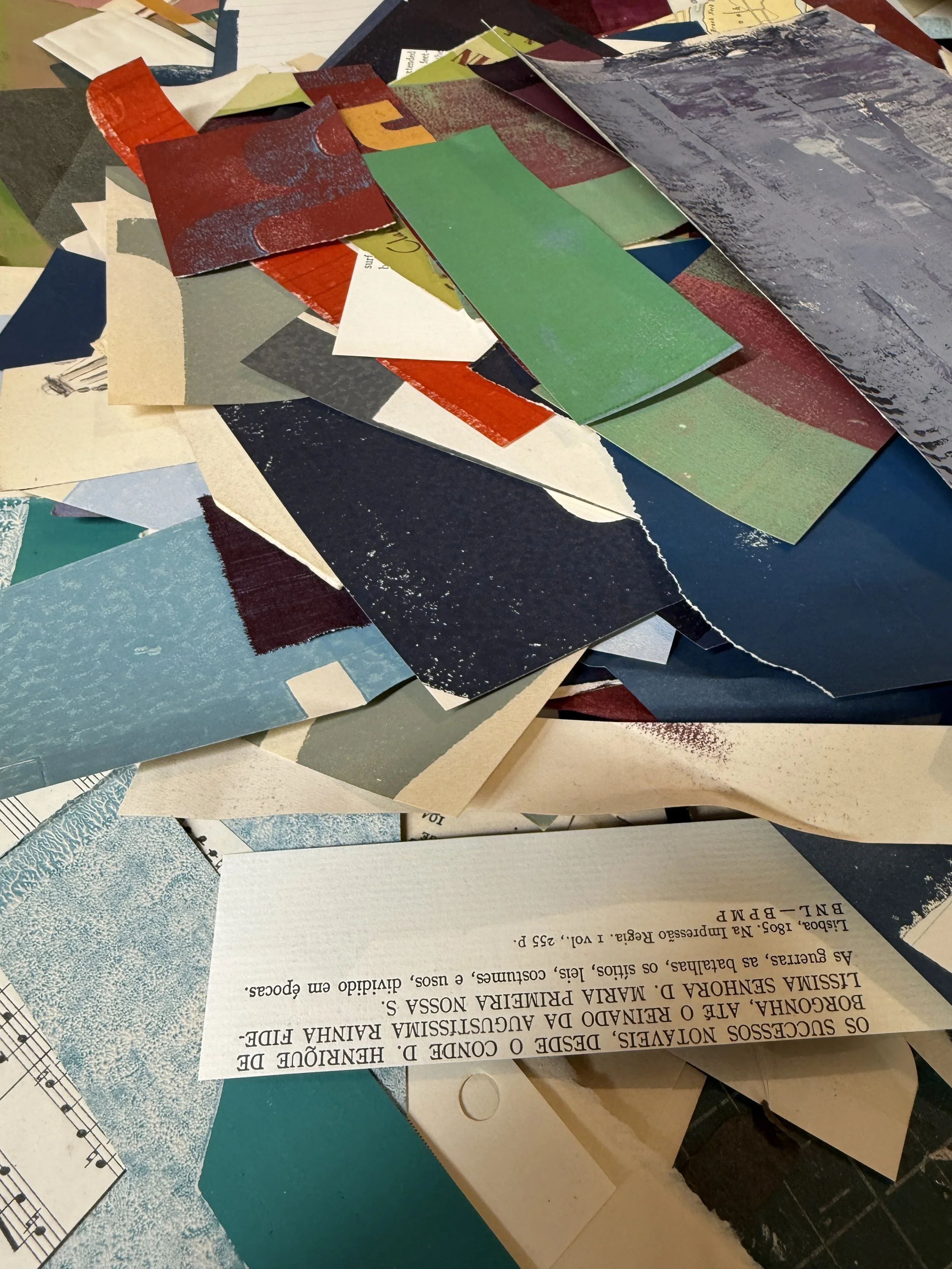
With my extra time, I start tidying up the studio.
There are two massive mounds of collage papers from all the pieces I've been working on for the past two months. I sort through them, separating the good scraps, which end up in a plastic tub, the trash scraps for the garbage, and the super good, large pages, which are color sorted back into file folders. Some new prints are too large for file folders, but I have one empty drawer in my flat files for those. It's hard not to get distracted by great scraps and use them immediately.
Once the morning routine is complete and my son is on the school bus, I'm back in the studio to start working on the 12" x 12" commission piece for licensing that I agreed to yesterday. I can't believe that I have a 1.5" cradled panel in the correct size and that it's prepped. I could work on paper for this, but then I'd be left with a piece that I'd have to frame to sell.
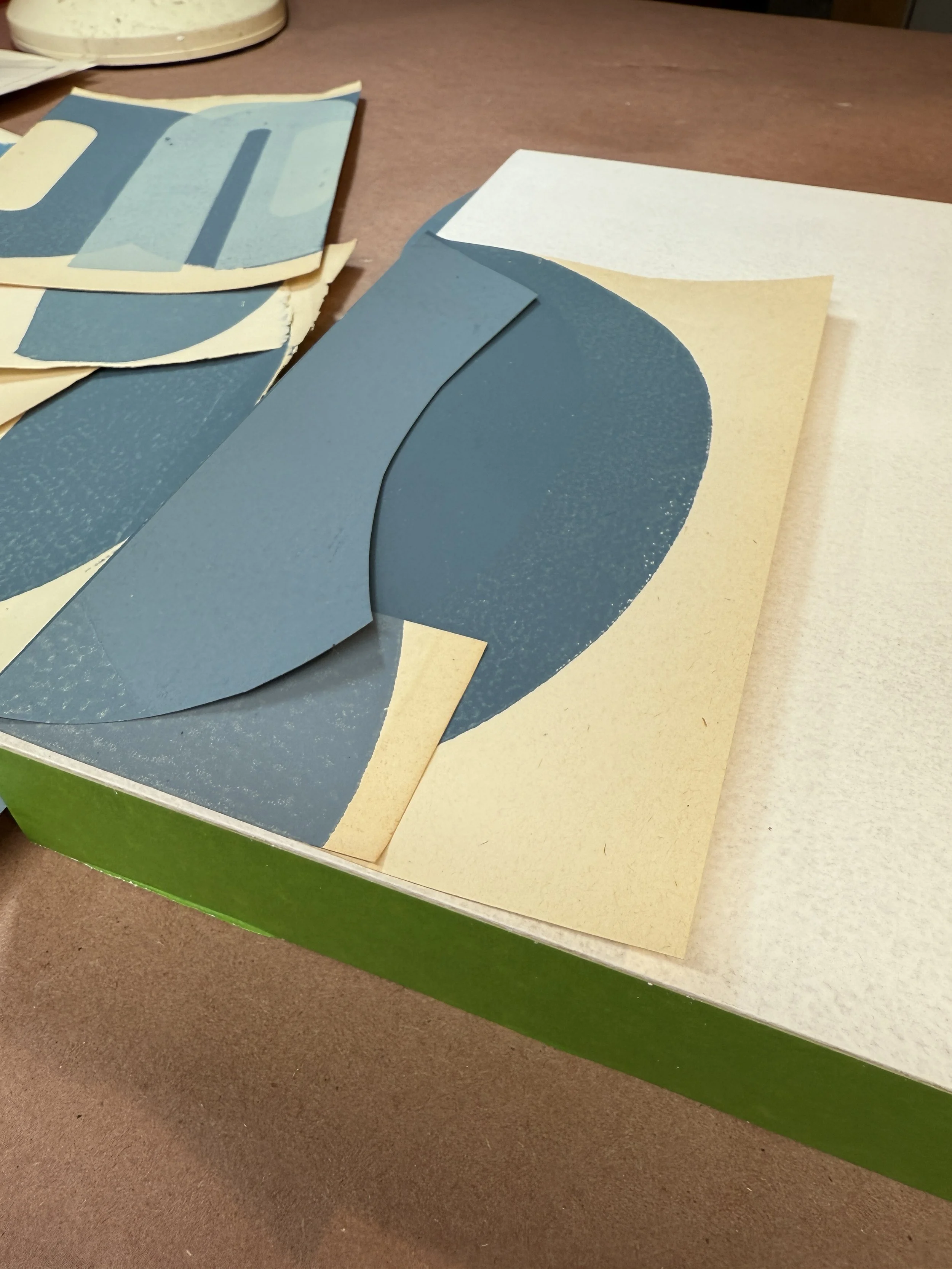
Taking out my file folder of papers, letterpress printed in blue, I find the leftovers from the series of nine that sparked the company's interest in this piece. I pull enough papers for several collages and put back the shades of blue that are too dark for this composition.
This piece comes together quickly, and I put it aside to dry. I'm unsure if some of the text will be visible after the matte medium dries, and I may need to revise that area.
I trim the edges off the two pieces from yesterday and end up damaging some of the paper. These vintage papers are delicate, and the edges of my pieces can tear. This means adding more papers to hide the tears. This can work to my advantage, because it forces me to add small details to the composition and variety is important.
This week continues to be a quiet one for emails with only one to respond to regarding payment for the commercial project.
I'm still stuck on the idea of distractions- those that I choose and those that are unexpected. I've heard of artists who lose track of time and work without stopping for hours, but I am not one of them. And maybe they are a myth?
Hunger and thirst (so many snack and drink breaks) If I ever have a studio space outside my basement, I'm going to need a mini fridge.
Cold- despite my battery-powered heated socks and jacket, I'm still cold and that drives me upstairs looking for the woodstove or a warm cup of coffee.
My watch tells me when I need to get up and move (it must think I sit on the couch all day), when really I stand so still, working, that it seems like I go nowhere. Which I guess I don't. I know I could not wear this watch, but the warning comes in handy when I've been moving the same piece of paper around for an hour and need to let it go.
The cats ask for things.
Husband and son ask for things.
Phone. I should leave it upstairs. Why don't I? Habit, I guess. I know I can block social media and email, so I can't check in five hundred times a day. Need to figure out how.
Some of these are part of being a hungry, thirsty human with a family, but some I could control. And what's wrong with an occasional distraction?
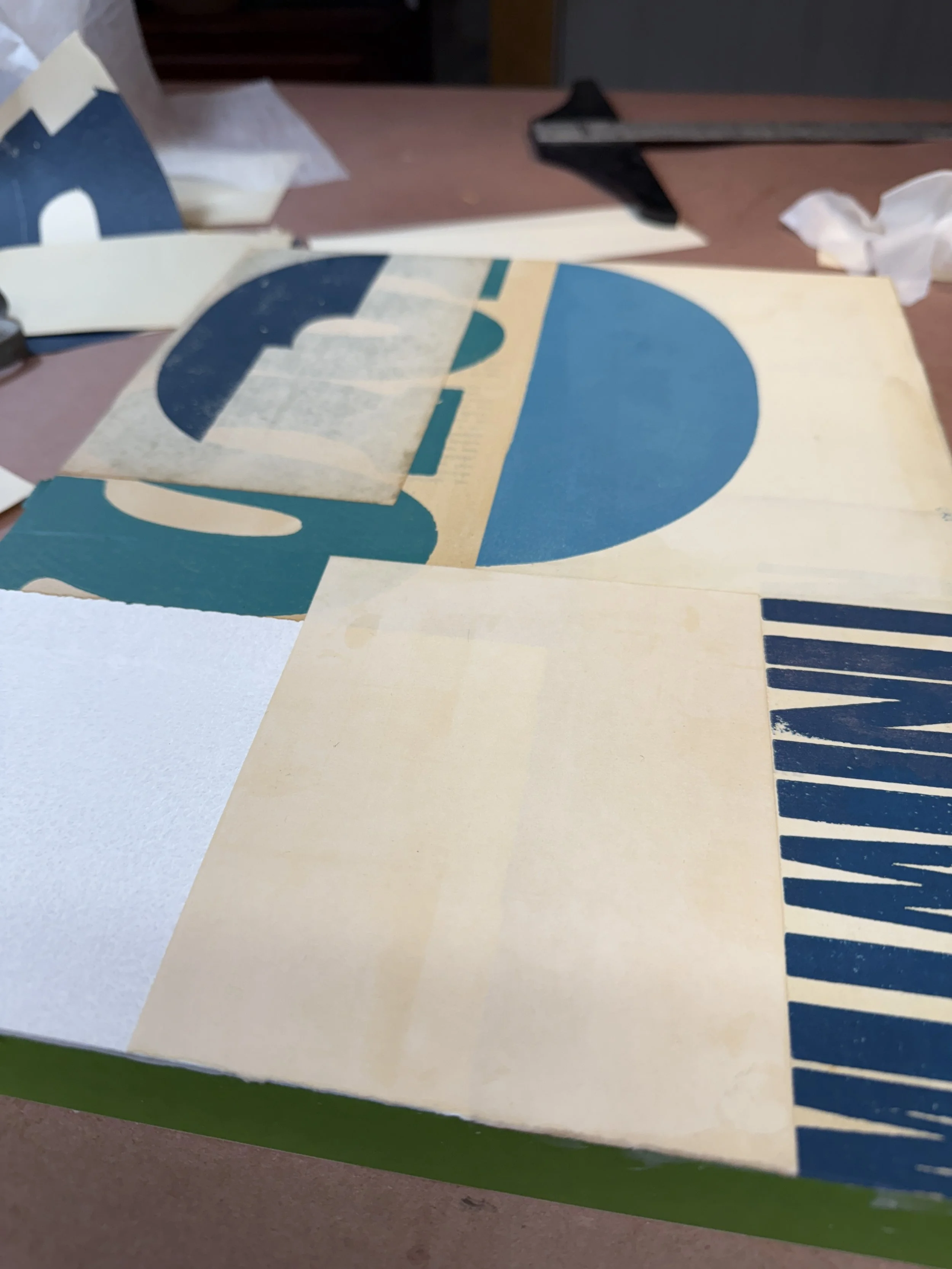
The next piece is underway. I choose a few pieces, and mind wandering, start to glue, only to find that it's a delightful composition. Why are some pieces this easy and others a fight? Could it be the break I just took?
False alarm- the piece is not good, and I'm in the same mess I always get into. I trust I can figure it out.
I did.
Back at the computer, I scan the 12" x 12" piece in sections and use Photoshop to merge the image. This cuts a bit off all four sides of the original, but not enough to impact the composition, and it leaves me with a high-quality image to email for approval.
Time to update Artwork Archive with the new piece and licensing information, post to Instagram, answer more emails, and add more to my to-do list. There are contracts to print/sign/scan/email, comments to respond to on social media, and text messages with a gallery director. This is why I can't check my computer all the time, because I think I have to jump into emails and get things done immediately. Creating art is hard, but wonderful, and business work is just hard; however, I don't have an art business unless I'm spending time on the computer getting work done. I remember the first years of serious art making when all I did was make collages and post to social media. I did not know where that would take me or how much I've quickly learned about running a business.
*****
After all of that, and a cup of tea, I'm back in the studio. I'm out of prepped panels and I take this as my sign that I have enough work for the three galleries and my website. Huzzah! I trim some panels and do a thorough reset of the space.
And now back to my notebook for some planning. While I know what I need to do now, I've done it many times, I still write it down. It helps me remember that the final stages of creating art take just as long as the actual art-making process.
Photography and scans of new work
Titles
Update Artwork Archive with the images and listings.
Save all the images to multiple locations.
Gloss coat x 2 for the isolation coats
Varnish coat x 2 (protect those vintage papers from yellowing)
Remove miles of painter's tape from edges
Polyurethane the edges and sand them smooth
Framing (Whoops- do I even have what I need for frames???)
Hanging hardware
Haul them all back upstairs and take in-situ photographs which never come out as nicely as I'd like. Add this to the list of things I need to learn how to do better.
All those images need to be saved and cataloged.
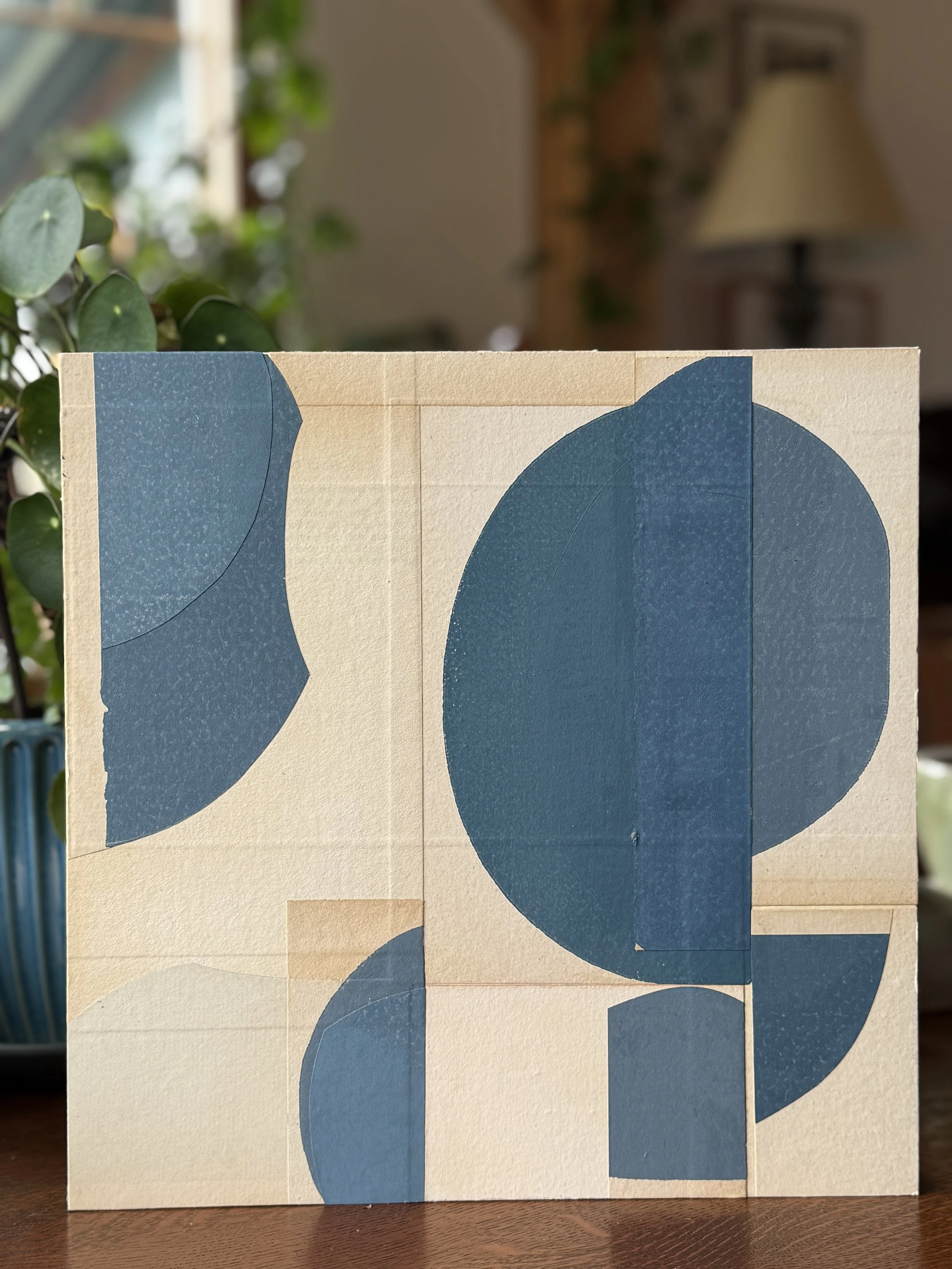
At least I finished the new work sooner than I expected- I gave myself five days and I finished in two!
The bullet point summary:
Use early morning to tidy studio and organize collage papers
Start work on 12"x12" commission piece for licensing project
Trim yesterday's pieces, accidentally damaging some delicate vintage papers
Reflect on various distractions throughout workday (hunger, cold, watch alerts, family needs)
Begin next piece with mixed results—initial delight turning to frustration
Handle business tasks
Return to studio, trim panels and reset workspace
Create detailed to-do list for final stages of art preparation
Realize I’ve completed new work in two days instead of planned five days