Preparing and Finishing Artwork
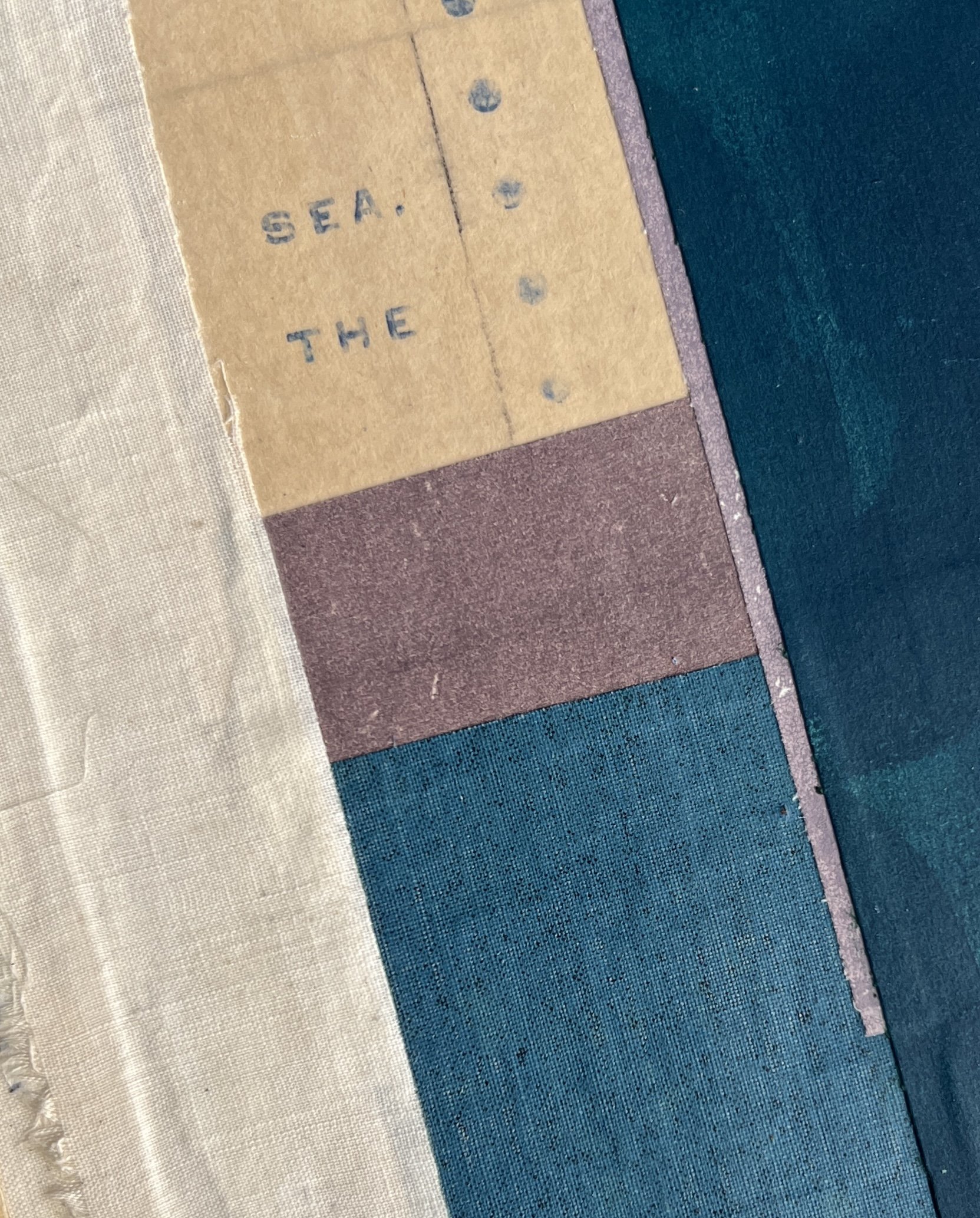
The question I am most asked, (second to what type of adhesive do I use) is how do I seal my work to protect the vintage papers? I’m going to bring you step by step through my process. This is not the only way to prep/seal, but these techniques and materials create a finished surface I like.
Preparation
When I work on paper, I start my collage without any preparation, but many of my collages are on Blick Premier Wood Panels 1-1/2" Gallery Profile, Cradled.Working on wooden panels means I don’t have to cope with curling paper substrates and can sand everything off and start again.
I use FrogTape Masking and Painting Tape (using a width of tape that fits the panel depth I’m using) to protect the edges of the panel, and then apply a layer of Golden Gloss Medium with a brush to create the first barrier between the wood and my vintage papers. Once that dries, I’ll apply a second layer.
Next, I apply a layer of Golden Acrylic Gesso with a brush or paint roller. No matter how careful I am, I make a giant mess with gesso and wear gloves and an apron to protect myself as much as possible, but it’s never enough. Once the first coat is dry, I quickly sand the surface with a medium grit sandpaper. Then it’s dusted with a damp paper towel, and I apply a second coat. Once that dries, I sand and dust, then start the collage. If the surface seems fairly smooth, I’ll sometimes skip sanding the panels.
Finishing
I’m not sure how I developed this odd mix of materials, but they somehow work together to create a lovely matte surface for my vintage papers. I use the following method with works on paper and panel.
I work with many layers of Golden Matte Medium as my adhesive, and it ends up under and over all of my papers, so by the time I start the final sealing process, the collage has already been informally sealed. I use two coats of Golden Super Matte Medium as my isolation coat.
Some of the vintage papers I use are hundreds of years old and have already begun to shift color or develop foxing. I’m attempting, with all these layers, to protect them from more changes, and sun damage is my greatest enemy. This is where the Winsor & Newton Artists' Acrylic UV Varnish - Matte comes in as my final defense. I apply a thin coat with a soft brush, let it dry for at least twenty-four hours, then apply a second coat. In between coats, I’ll closely examine the surface and gently remove any dust or debris that has settled into the sticky varnish.
Note: The brushes I use for isolation layers and finishing layers: Liquitex Freestyle Brushes- broad, flat in 4” and 6” widths. If those are too much of an investment, look for a soft, flat-edge synthetic bristle brush. Don’t use anything with natural/real bristles because they tend to shed into your finishes.
The Final Touches
I remove the tape and sand all the edges smoothly with fine grit sandpaper. Then I seal the edges with Minwax Polycrylic Topcoat in Clear Satin Finish (two coats).
Framing
Cradled panels don’t need to be framed, but I like how polished they look with an Ampersand Floater Frame. These come with hanging hardware. If you are working on paper and framing your pieces, I suggest using UV-protective glass as an added barrier of protection.
I hope there is something here that you’ll find helpful in your own practice. And if you aren’t an artist, I hope you’ll appreciate even more how much care goes into creating a work of art.
Disclaimer: This post contains affiliate links. If you use these links to buy something, I may earn a commission. Thank you for helping to support this blog!