Write Your Way to Better Art Conversations
The last time a non-artist asked you about what kind of art you make, how long did your explanation take? A minute? Less than that? By now, you've probably developed a way to discuss your process in the fewest words possible because you know you risk losing their attention (nodding head, distracted eye contact). Sure, there are exceptions, and those are the best conversations.
But we want more people interested in our art, and it would help if we could capture their attention every time,
This idea of mine will take you out of the studio, but It will be worth it.
I want us to write a description of our process from beginning to end in as much painstaking detail as possible.
When we’re done, we’ll have a massive well of material to draw from:
Pull the best parts into a concise statement for those non-artist conversations
Use elements for social media content, newsletters, and blog posts
Develop online or in-person workshops around this process
Use the content for artist talks or artist statements
Spark new ideas for how you work and what to work on next
This is a celebration of your work and all that you’ve learned.
Let’s get started, and if this seems daunting to you, start with a list.
For example:
Source materials
Prep substrates
Decide on materials for the project
Select letterpress type
Choose a color palette
Print on vintage papers with the type
Begin the collage composition
Revise the piece
Seal and varnish
Frame
Now the writing begins:
Choose one and write your process from start to finish, using as much detail as possible.
Repeat this step until you’re finished.
Read it out loud.
Revise your work until the sentences are crisp and beautiful, so your process sounds like a work of art.
Share your work with an artist friend, ask for feedback, and revise again.
Now that you have this amazing resource, start analyzing it and utilizing the information everywhere for all those many purposes I listed—especially for the concise and lovely summary you’ll use the next time you’re asked about the kind of work you create.
For your inspiration, I’ve crafted two versions of the beginning of my process piece.
Beginnings- Version 1
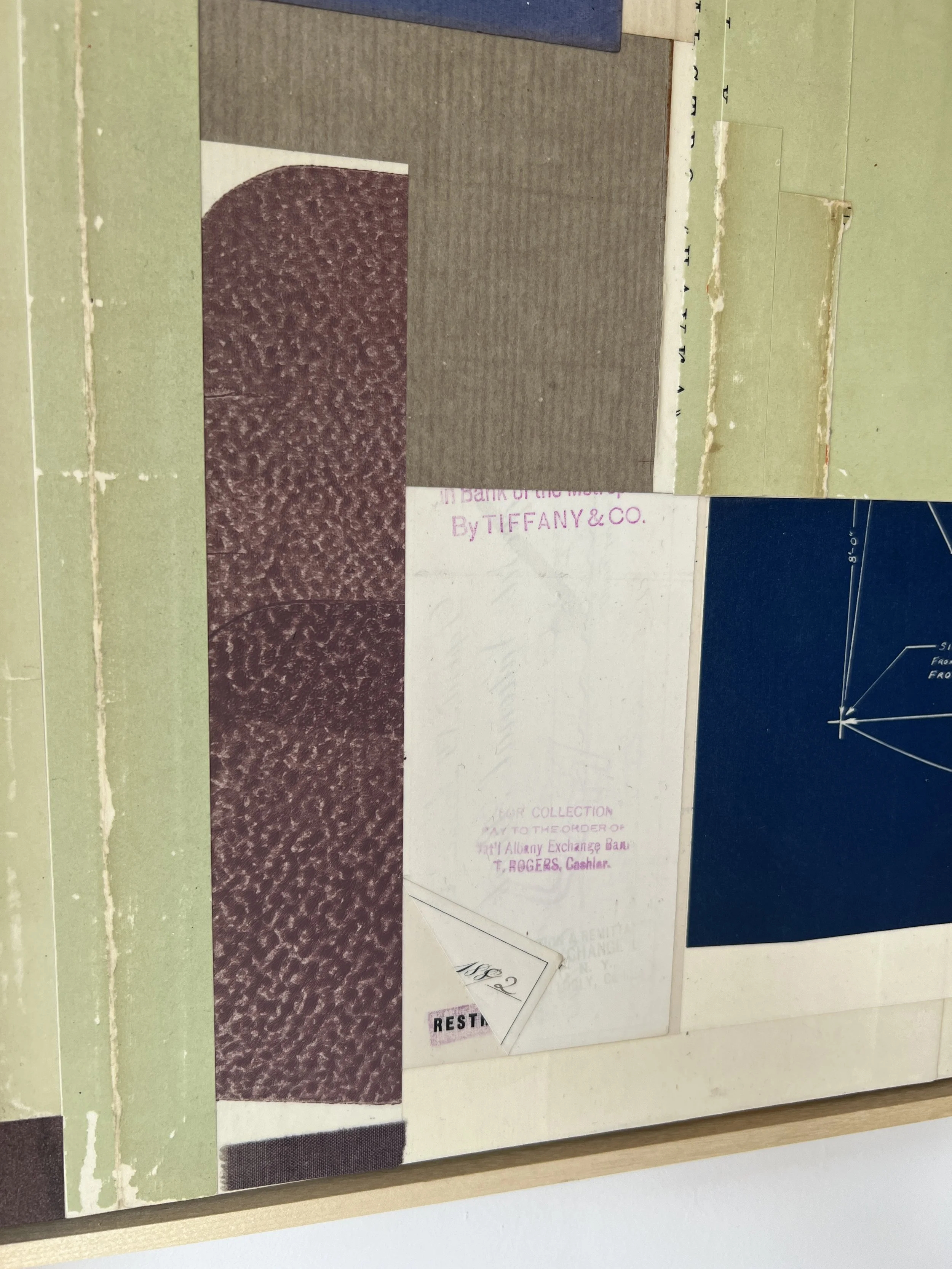
It’s a rainy Monday morning, and I’ve left my gloomy studio to visit an antique store in search of inspiration. I like this one because each vendor stuffs their shelves with a hodgepodge of items, so it’s a true treasure hunt. On the second floor, behind a locked glass door, I spot a stack of old paper tied with string. Receipts? Bending down, I crane my neck to look at the price, which is hidden underneath the papers and written in the smallest possible writing. I have the clerk unlock the case and find that the papers are canceled checks from the 1800s. There are bank names, lots of inky stamps, and beautiful handwriting. These aren’t something I can leave behind, especially for ten dollars. These papers carry a story that will continue in my next piece.
Beginnings- Version 2
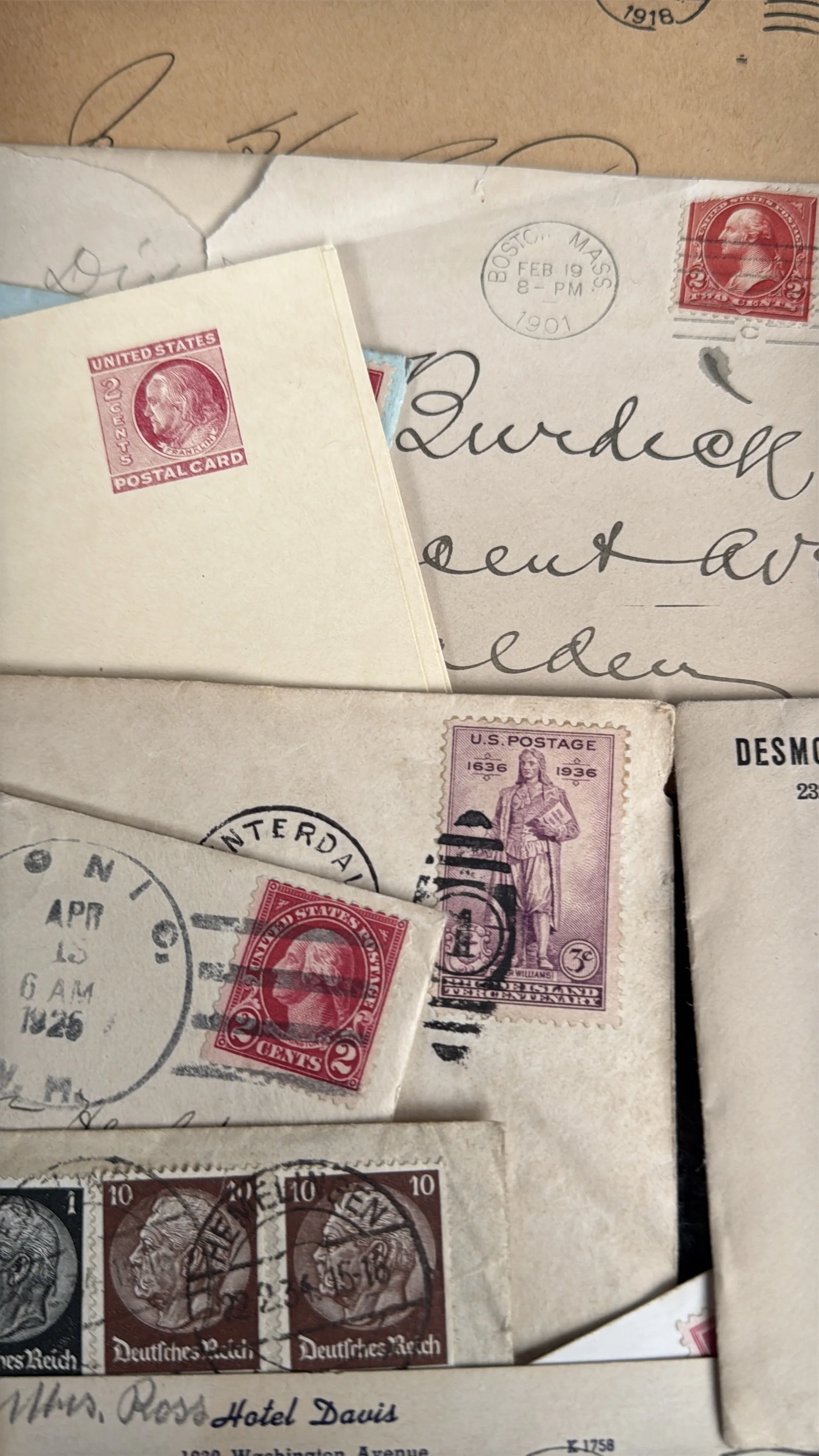
My work starts with the accumulation of materials. I search antique stores, library book sales, estate sales, and online sources for old paper. I'm interested in vintage books and ephemera that readers and time have marked because they have stories. The letter someone wrote from college in bright green ink to an old friend inspires the color palette for a collage and becomes part of the composition. That’s a much better use of old papers than discarding them. Sourcing these old papers, and choosing which ones I’ll use for my next collage is the starting point for each abstract collage.
One draws the reader into a story, while the other is more general. The first version effectively explores the process behind one specific piece, and the second is better suited for a broader process description.
If you try this idea, please let me know!