Playdate: Studio Organization
Cleaning and organization are play? Yes, it can be, which is why I chose this for my May Playdate Project. (My 2026 project to work each month with new materials, ideas, or revisit things I haven’t done in a while). I love moving furniture and throwing things out.
I'd used my Studio Organization Guide a few months ago to solve a specific problem — not enough table space — and it worked. But spring arrived, and I was feeling crowded again. Every time I tried to find a pad of watercolor paper, I had to open three different drawers. And didn’t have extra brayers somewhere? The light coming into the basement made me notice everything that was in its way.
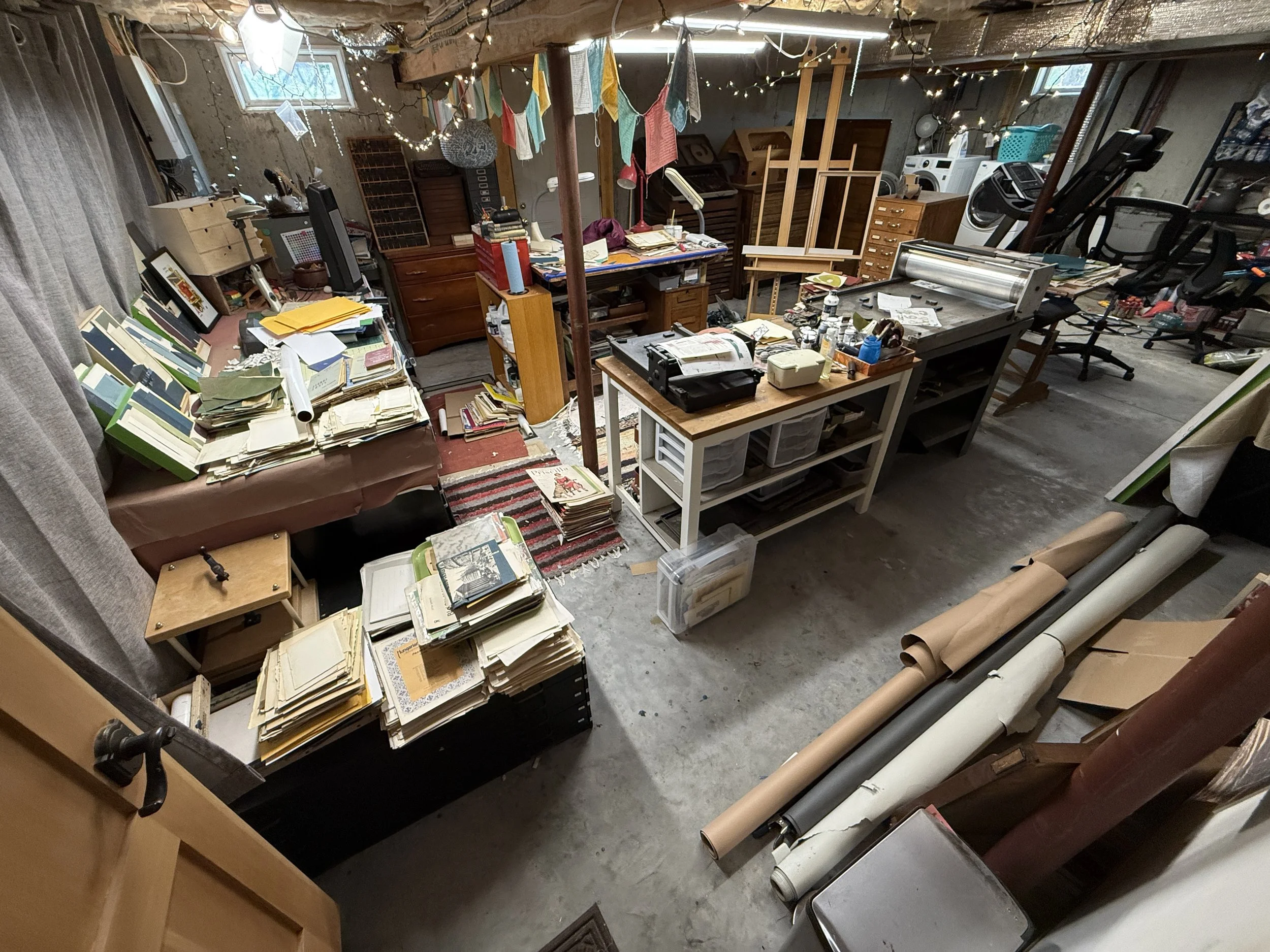
Studio view at the beginning
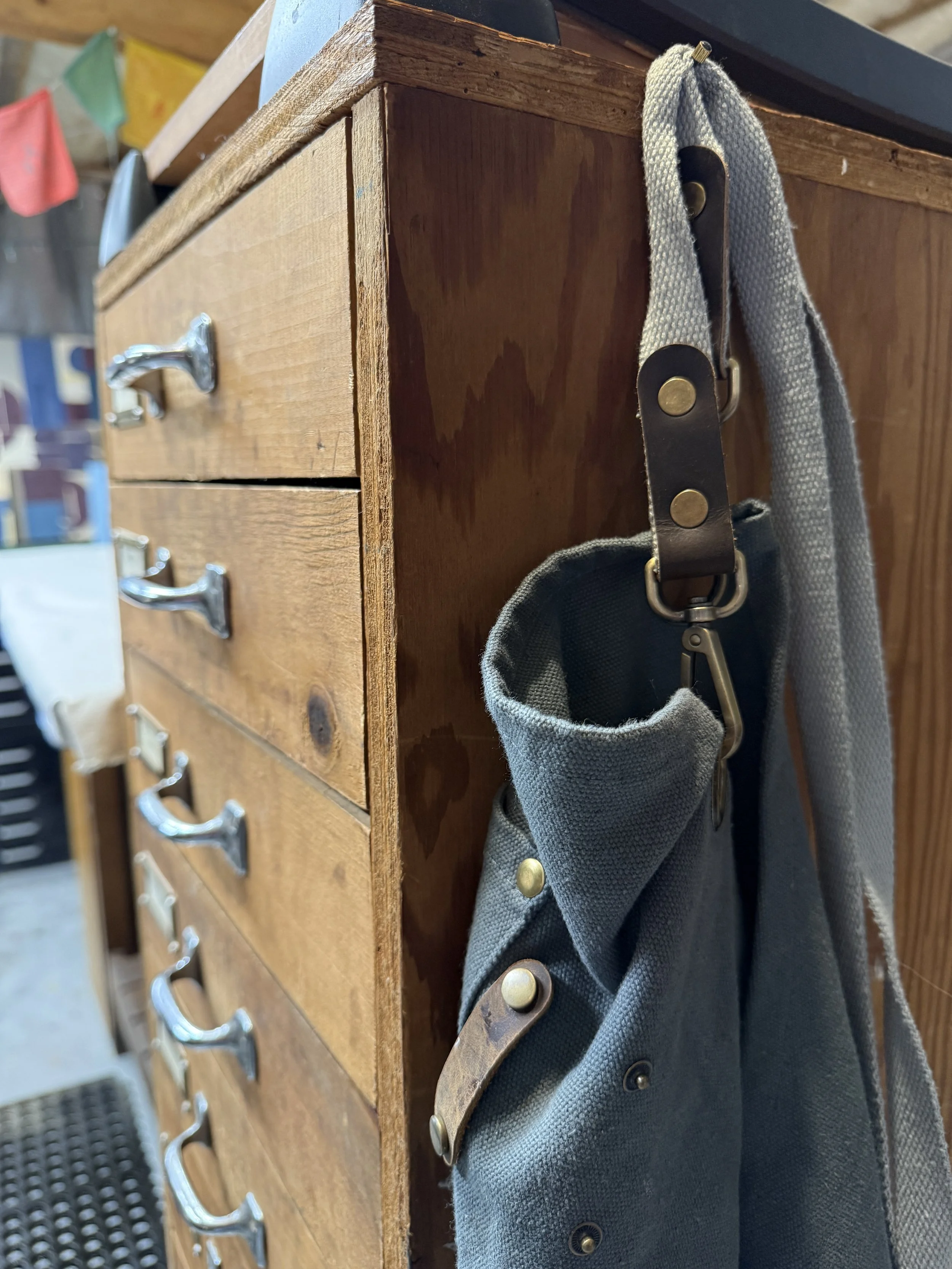
My son, who wanted to earn some extra money as my studio assistant, offered to help. He’s nine, so I decided the first task would be to clean out my flat-file drawers.
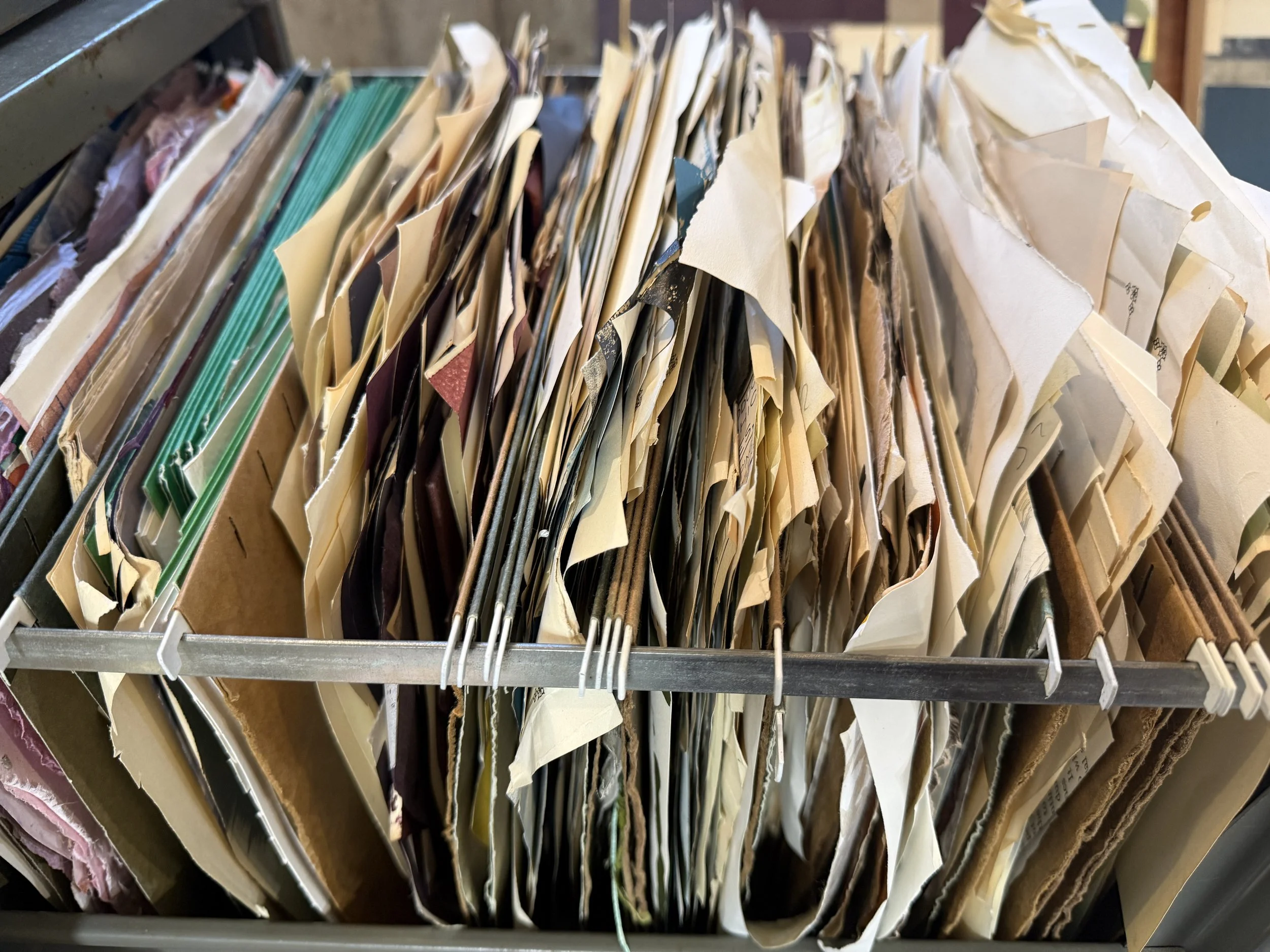
My flat files were full of cool papers I'd forgotten about and materials I'd collected thinking I'd use them, and now knew I wouldn't. I’d noticed that papers were getting smushed and ruined in drawers.
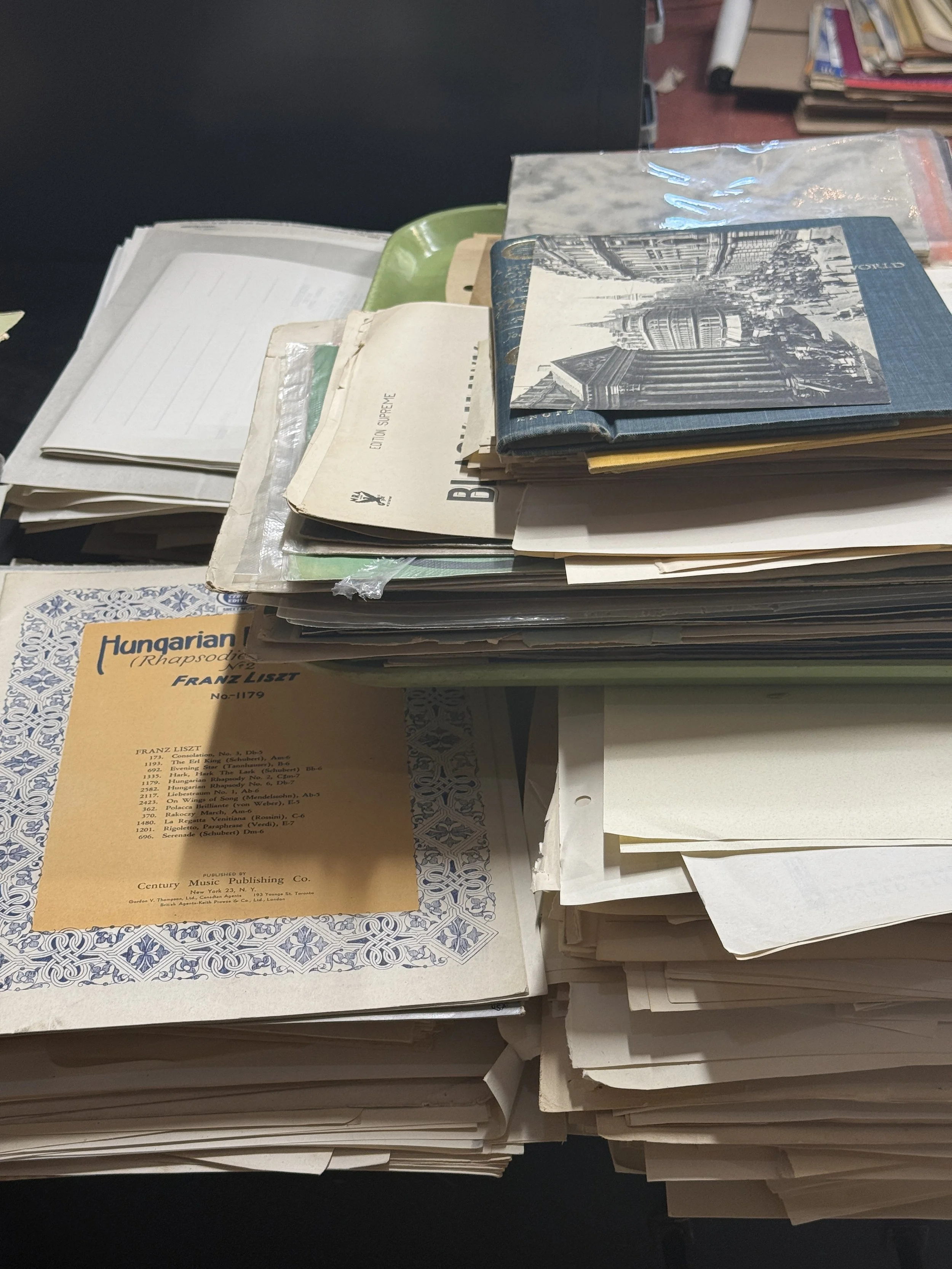
One drawer at a time, we unloaded the contents onto cafeteria trays and brought them upstairs into the sunlight. Then we sorted by category: blank on one side, writing on both, things I wanted to get rid of. The papers, aged past sepia tones to dark brown, were the first to go. I set aside papers with handwritten notes and found some beautiful photographs that went up on my studio inspiration board. I did a final pass through all the piles and pulled out papers for classes or the recycling bin.
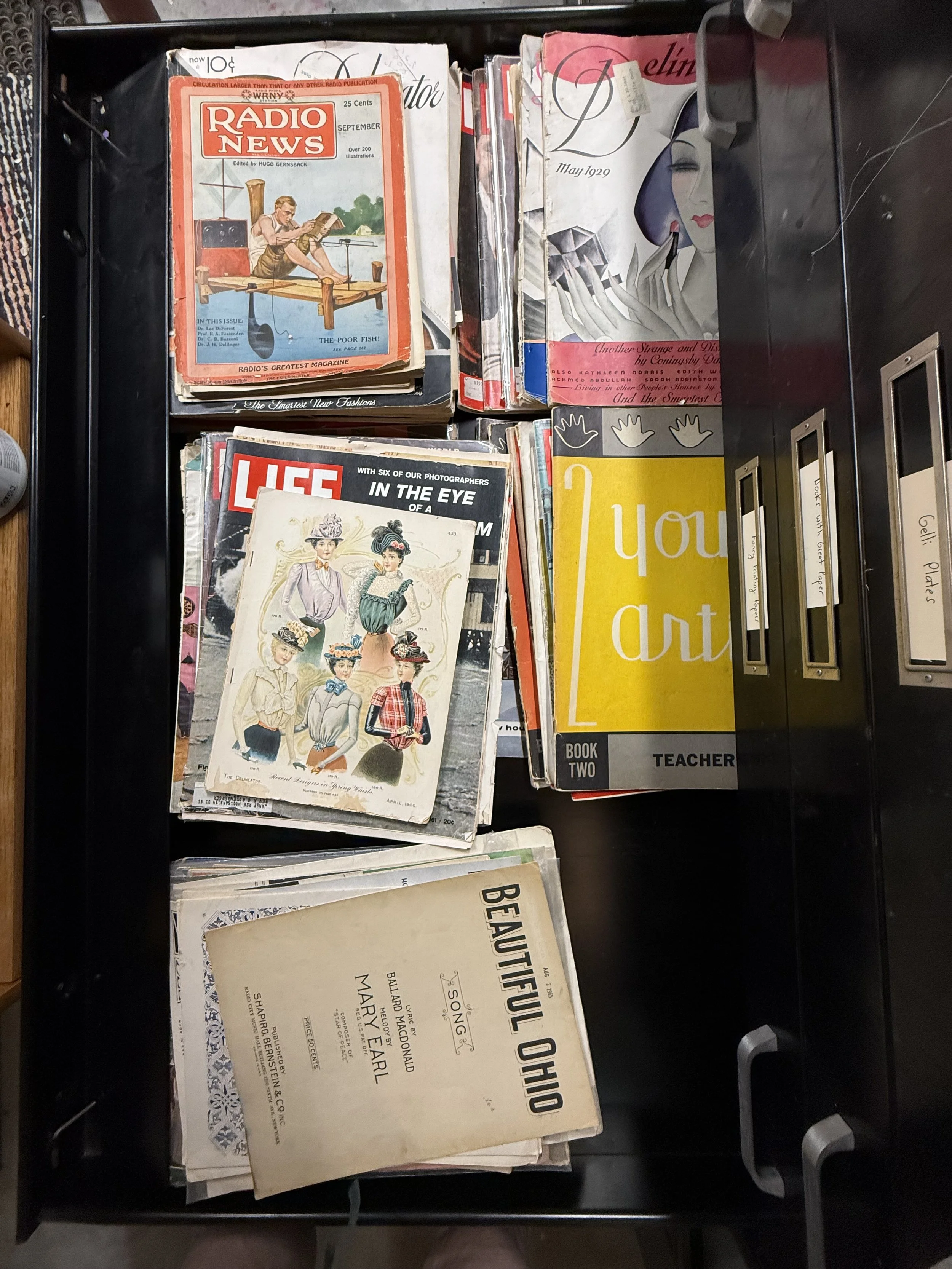
Next, we dug into the specialty drawers and cleaned them out — sheet music, magazines, maps, the interesting stuff. The pile of what I didn't want kept growing. So did my stack of papers that were too small for printmaking but perfect for sketchbooks or small projects — to alter with typing, stamps, stitch.
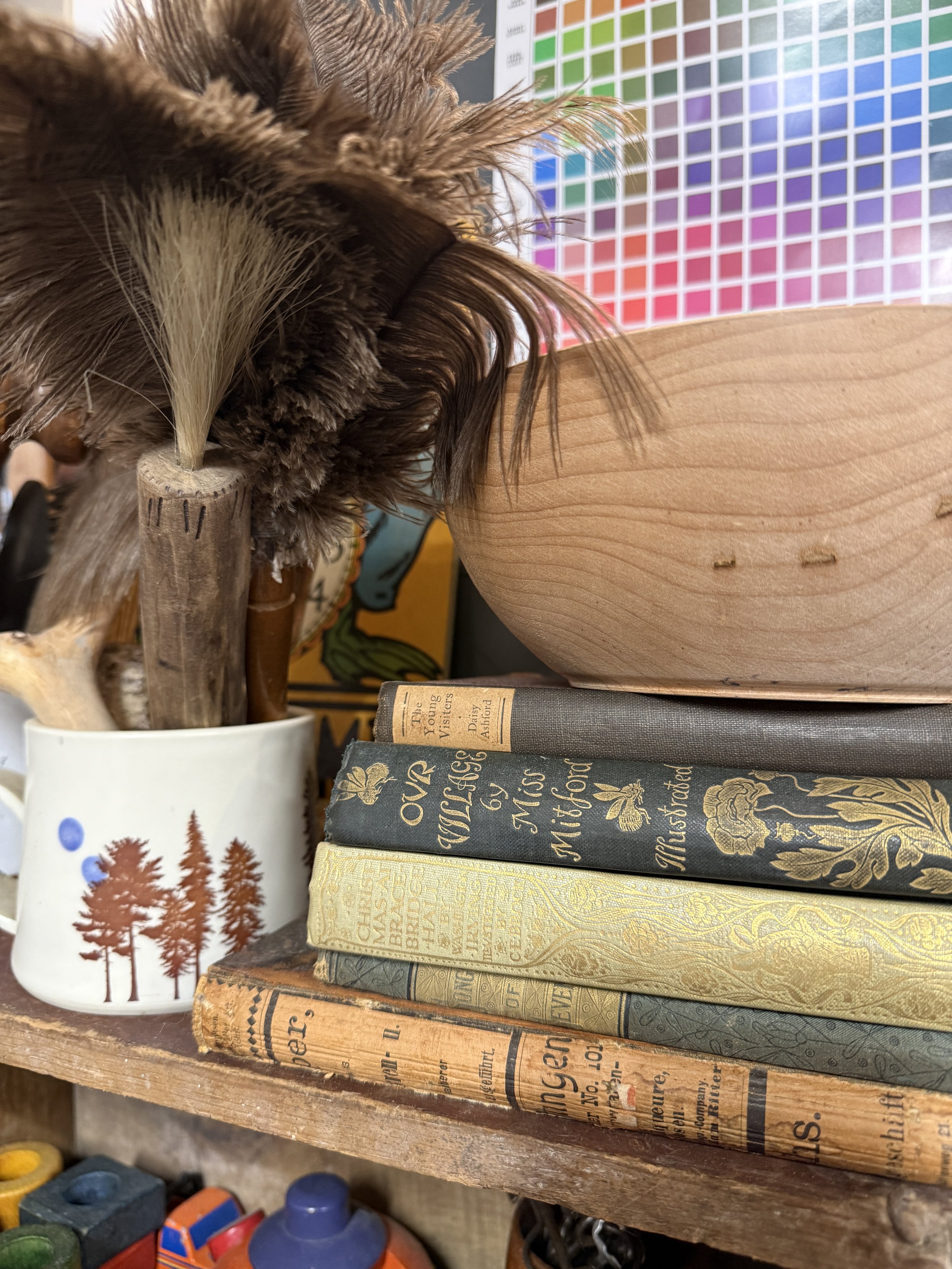
It's a bit of time travel, remembering where and how I got some of these papers. Facebook Marketplace for the sheet music. These magazines were from a COVID-year yard sale. The printmaking papers came from an estate sale of an artist's home, and all these books from the antique bookstore that was closing; there are stories and memories in all of them.
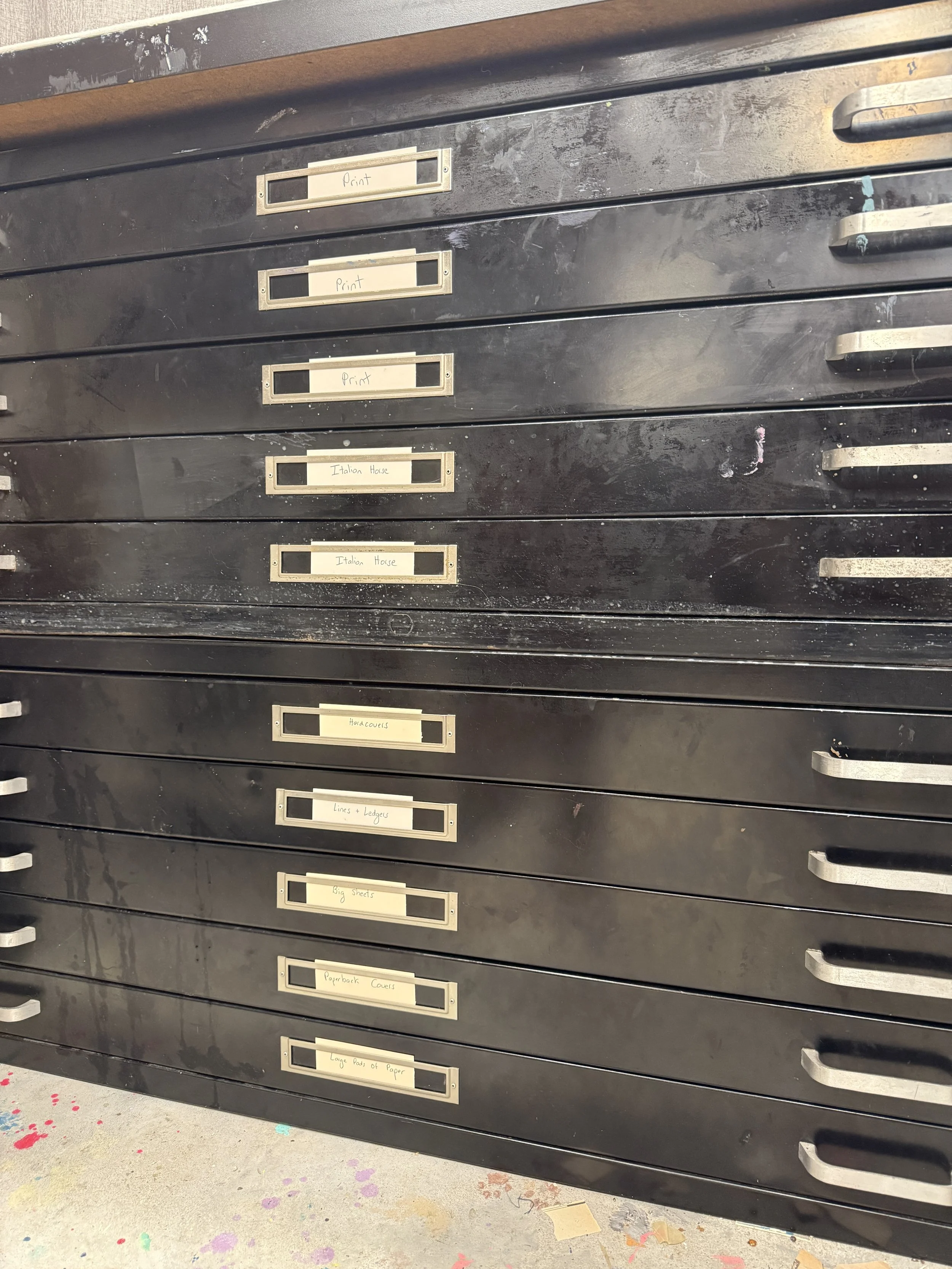
I labeled and organized every drawer, then turned around and asked, “What else?” (My studio assistant had quit, so I was on my own.)
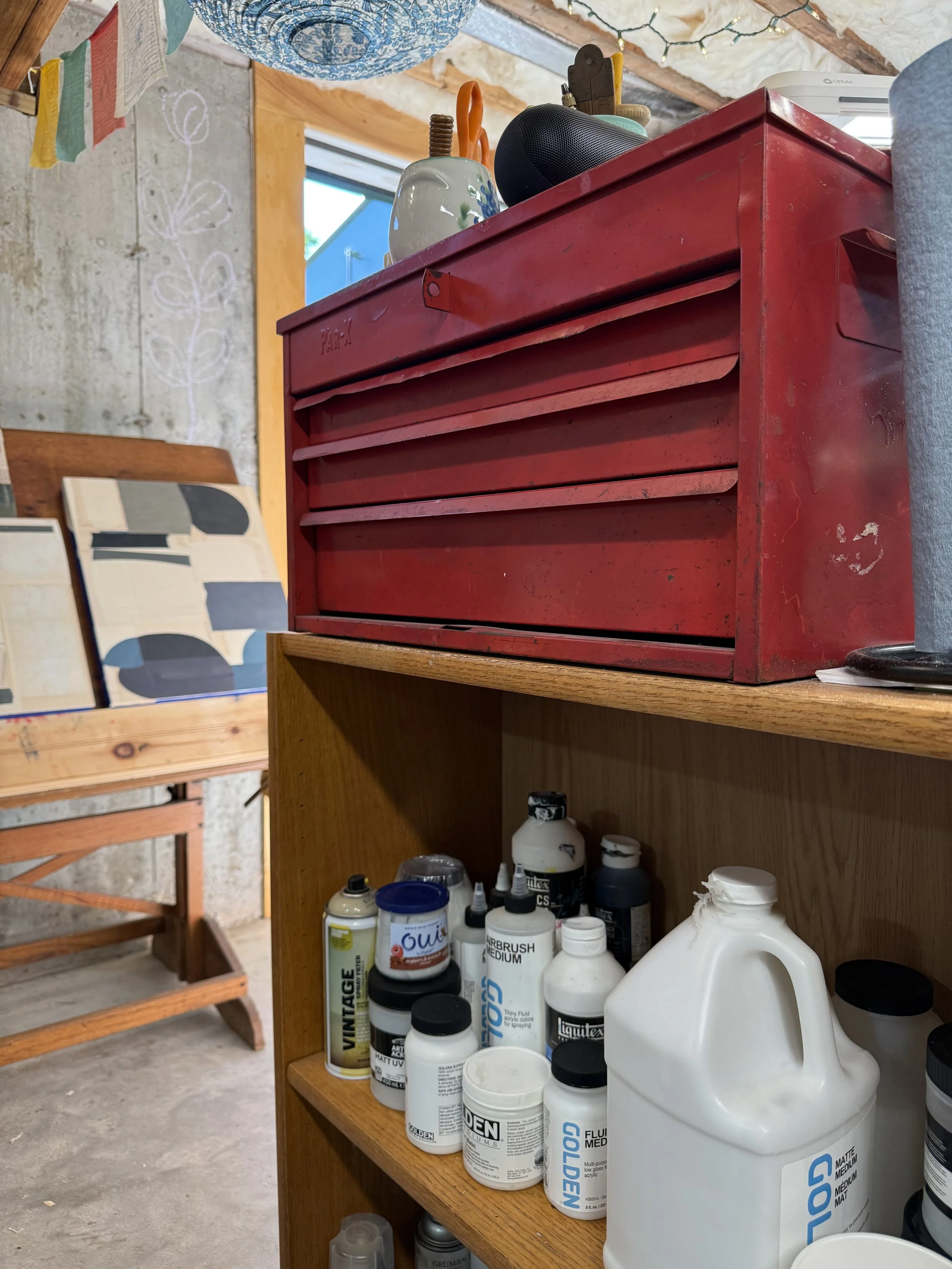
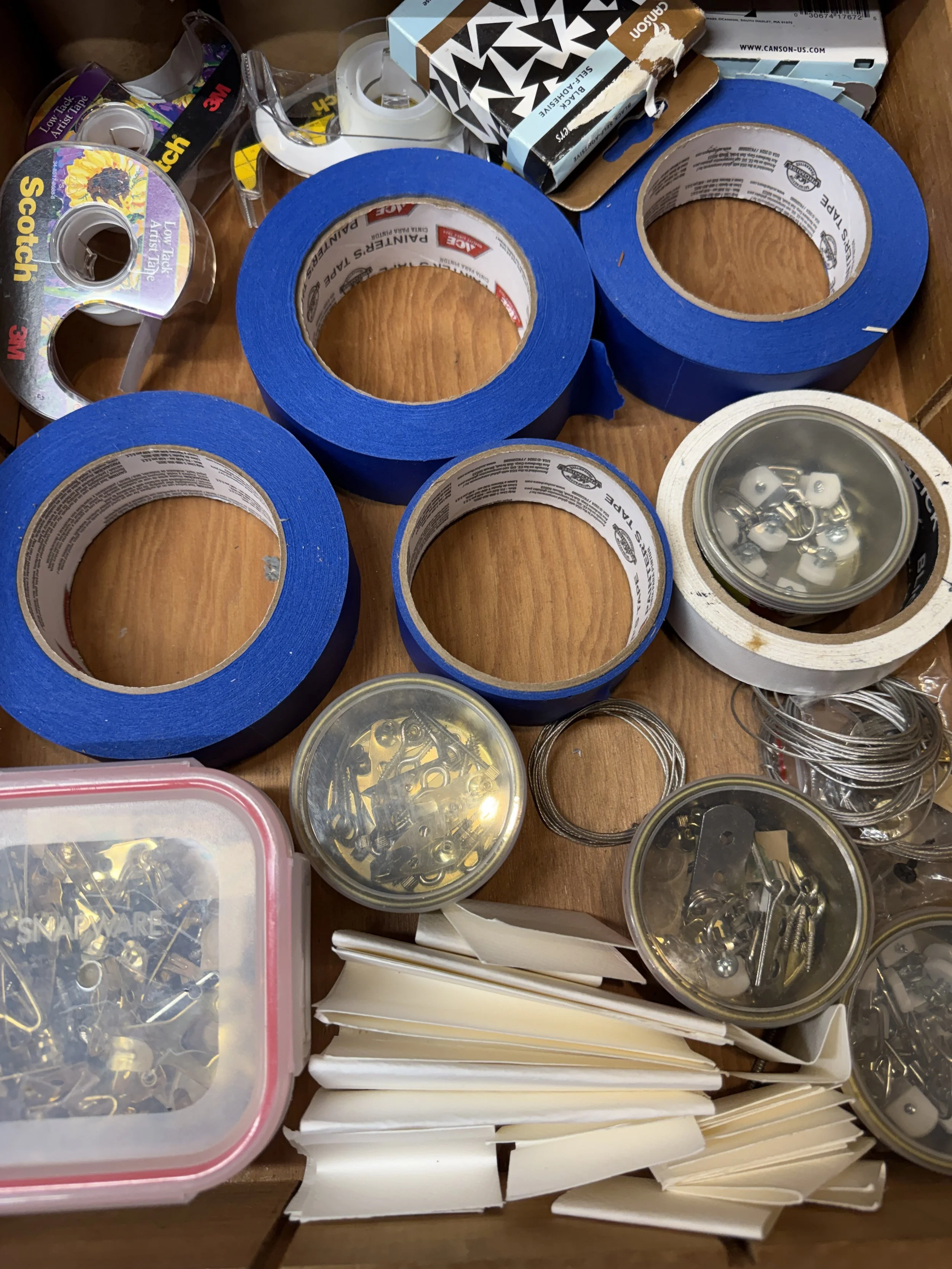
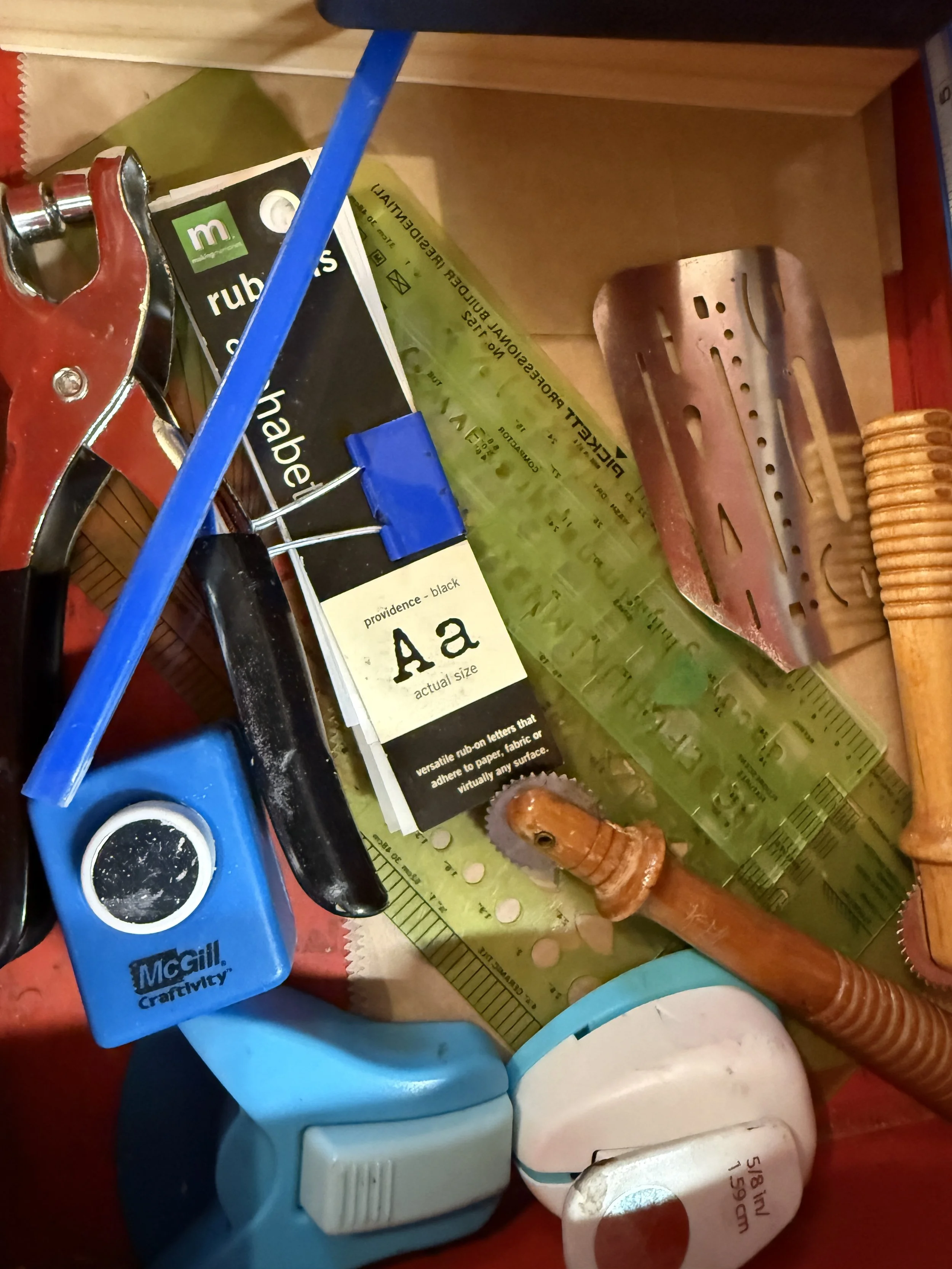
There was the unglamorous work of rearranging furniture, sweeping, throwing out dried-up paints and brushes, and putting a new cover on the work table. The fun stuff was gathering a small kit of tools for quickly altering collage papers, building a class supply kit I can grab when I teach, and making a container of papers for students to pull from. The best thing was filling an old IKEA toy box with labeled folders of amazing papers I'd rediscovered.
The space felt lighter and happier when I was done — still a basement, but cleaner, better organized. I felt more connected to the materials I actually want to be using. It stopped me from thinking I needed more paper or more type.
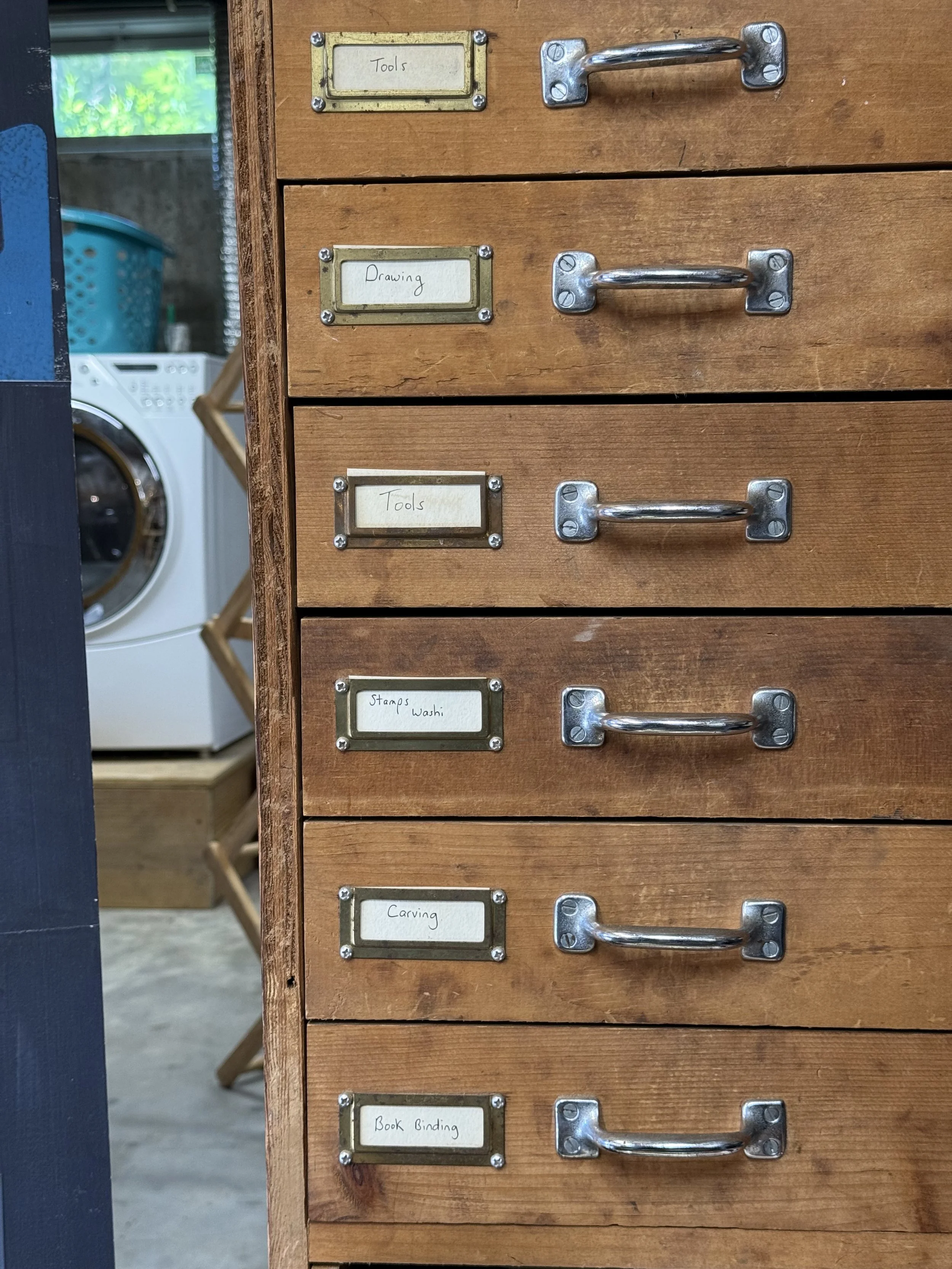
There's still room for more, but this was a real start. I was so reinspired by what I found that I ended up creating a Paper, Type & Collage PDF for newsletter subscribers — an unexpected bonus from all those hours of cleaning.
If you're thinking about tackling your own studio, I'd suggest starting with asking one question: what's your biggest frustration in the space right now? Start there. One drawer. One shelf. A small success has a way of pulling you into the next one.
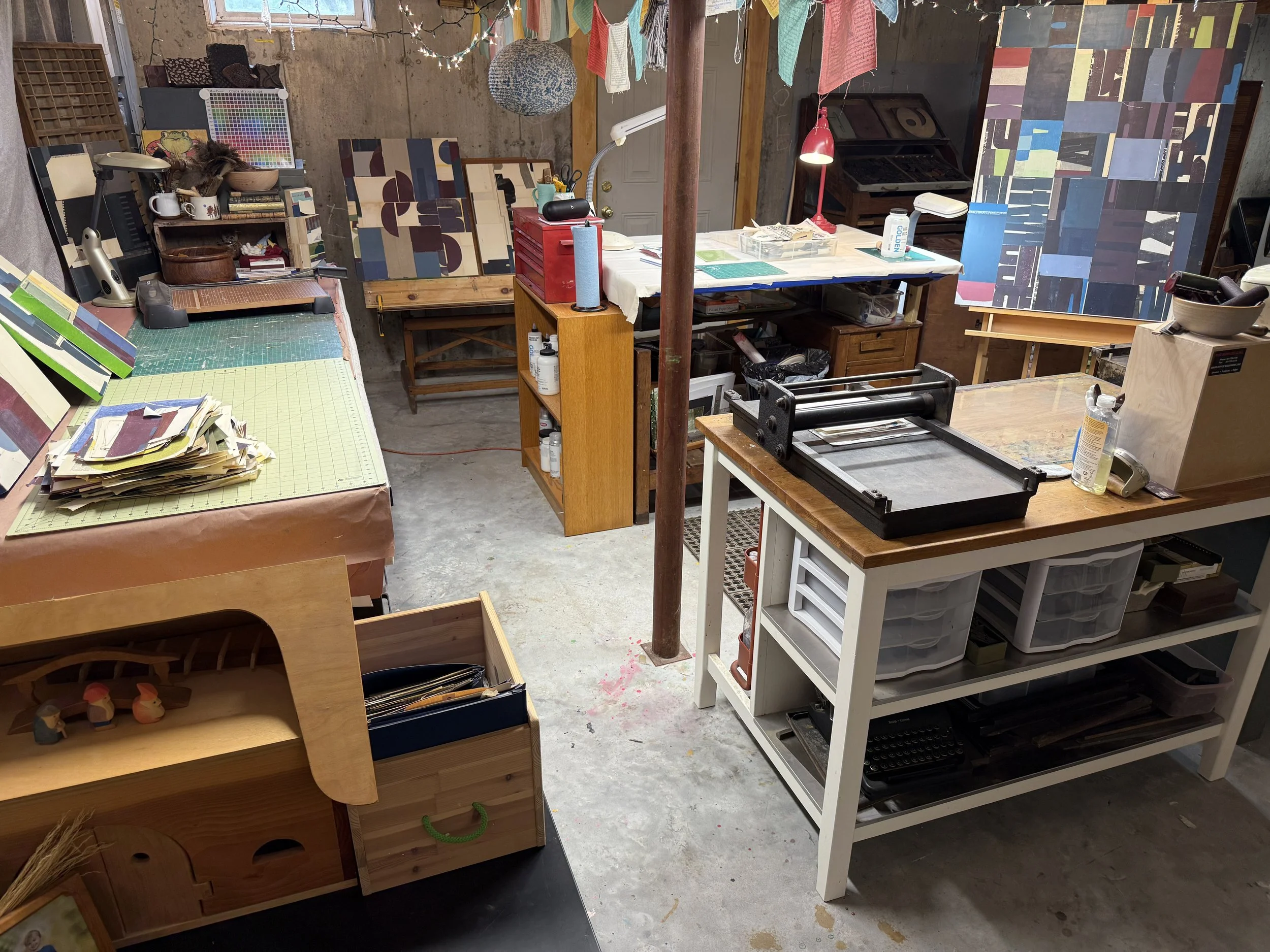
Much better.
More of what comes out of the studio, on the wall, and is available lives here.