Artist Talk for Impressions
June 2025
Ah Haa School for the Arts
Telluride, Colorado
Let me start with a story.
When I opened that moldering cardboard box at an estate sale, I had no idea what I was holding.
It was a rainy Saturday morning, my son and I walked into a house that had been empty for a year with an owner who had never thrown anything out. The house was small, crowded, and it felt sad. We moved quickly past the furniture, dishes, and clothing racks. I found the magazines that drew me to this sale in the first place, Women’s World from the 1930s, and put them all into my trusty LL Bean Boat Tote.
Upstairs, in a storage room, I spotted a box on the bottom shelf of a metal rack filled with old manila envelopes. The space was claustrophobic, and I wanted to leave, but I dug into the box and felt the finder’s thrill of excitement. A few old ledger books, lots of handwritten pages; a treasure trove of paper ephemera. I didn’t look at anything, just upended the box into my bag, and we headed for the cashier, who took a look, told me I had lots of good stuff, which was questionable unless you’re a collage artist, and charged me thirty dollars.
I unpacked the bag on the living room floor at home and sorted the papers. Each manila envelope, maybe thirty in total, contained a handwritten short story, and the ledger books were filled with drafts of these stories. I had the archives of a woman who was trying to have her work published in the 1930s. She was an artist, creating paper silhouettes for a Boston gallery and speaking about her work in Newport. Her father was an artist, a painter.
A story of her life emerged the deeper I looked. And this is where the problems start.
As an artist working with vintage materials, I usually have no problem tearing up papers and reworking them into art. But this box of materials adds complications. I’m invested in her story- in her stories.
But…
I don’t want to hang on to crumbling papers- to have them stay in a box for another fifty years only to end up in the trash. Her stories help me think of my art, and my process.
When vintage papers are collected, you make a judgment call. If they are valued because of their rarity, don’t use them. If they are works of art- a beautifully bound book, or someone else's art, don’t use them. Sell them, donate them, or start a collection. When I decide whether vintage materials deserve new life or preservation, I ask myself questions to determine their value, curating my materials instead of using everything I find.
I’ll bring you into some of the pieces, and how the found papers inspired the finished compositions.
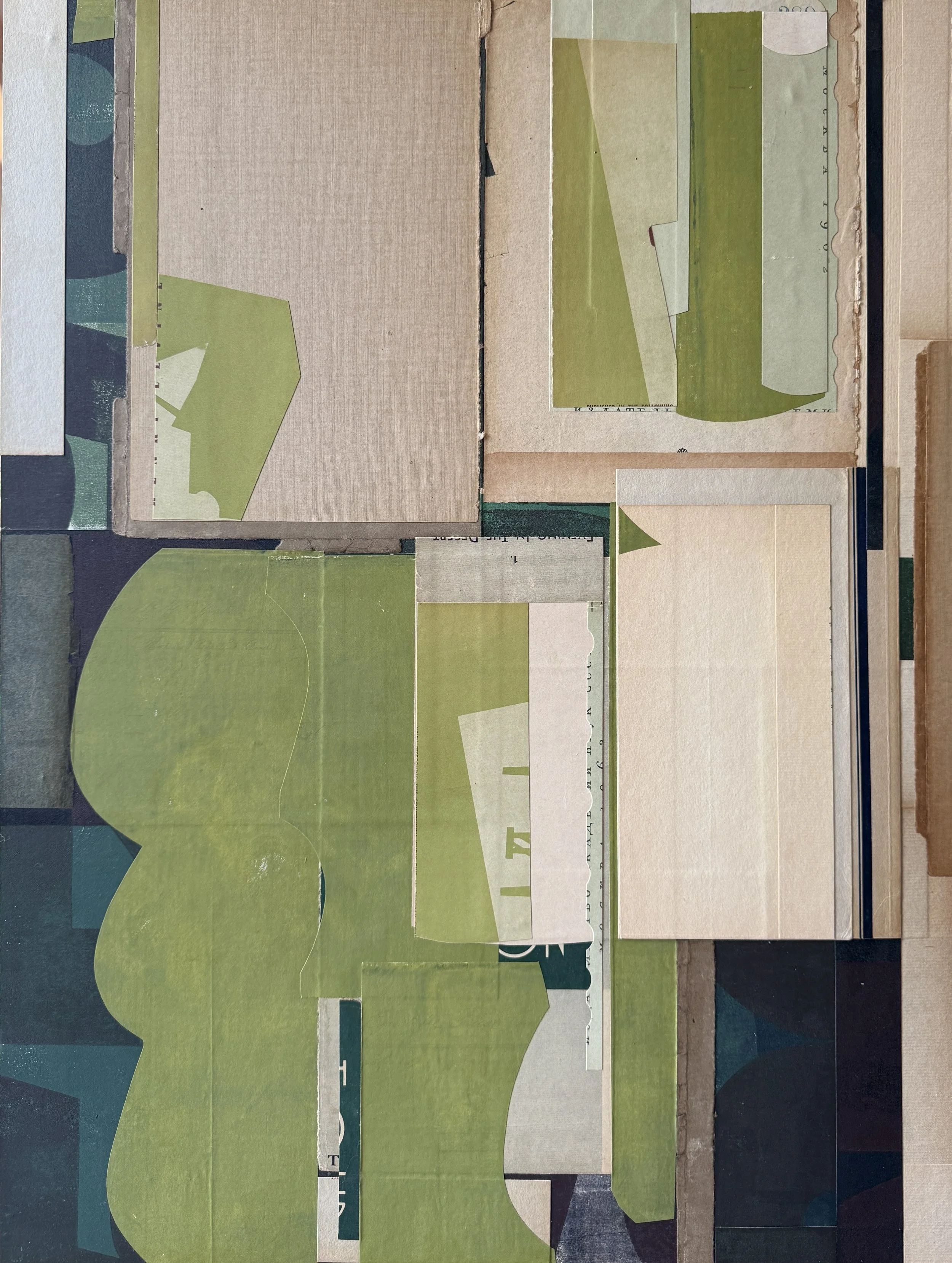
Let’s start with one of my favorites, Leave No Stone Unturned. The large areas of green are on pages removed from a railroad ledger book from the ‘20s. The book is massive, and every page accounts for the finances of one year of the company: lines, numbers, and beautiful handwriting. It isn’t rare or historically significant, but now, printed with paint and used in a collage, it becomes interesting. The text from another book that I added was abstracted to look like railroad ties. This wasn’t a purposeful decision, but something I noticed after the piece was complete. The papers direct the composition when I get out of the way. What once was an accounting record has become a piece about journey and destination.
With the partner pieces, Tracks and Not Lost, Looking, I used a map with beautiful thin paper and lines. The lines became how I guided the viewer through the piece, and as you look more closely, you can see the papers underneath- sheets of music that you may recognize if you’re a musician. I’ve created pieces that have multiple stories for the viewer to explore. There’s the view from across a room- black and white, minimalist, and eye-catching. But I don’t want that to be the only story, because as you move in, you’ll see those lines, and you move in closer and see the music. And all those layers and stories bring these ephemeral papers together in a new way, with a new life. And isn’t that better than having left them out for recycling?
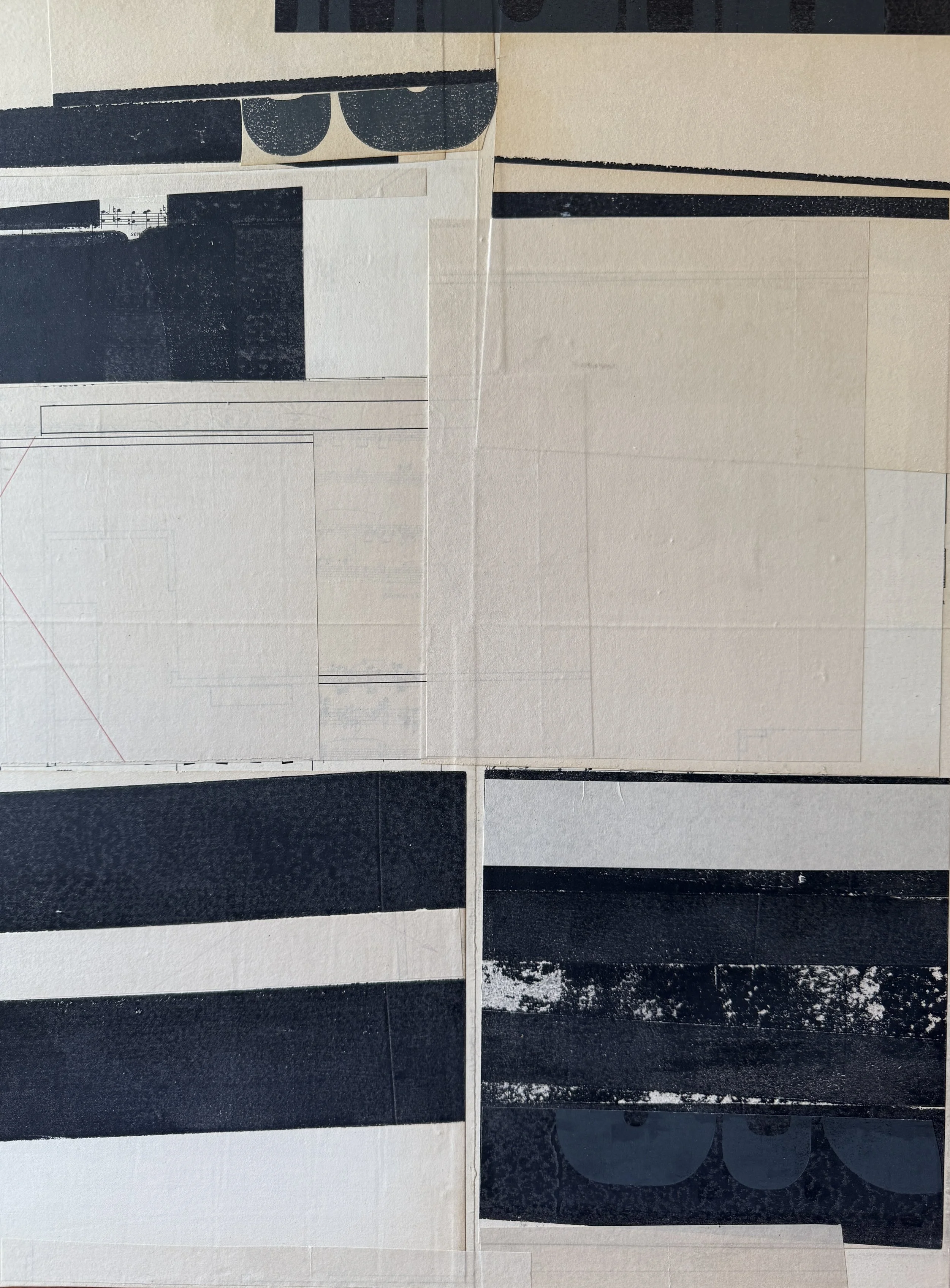
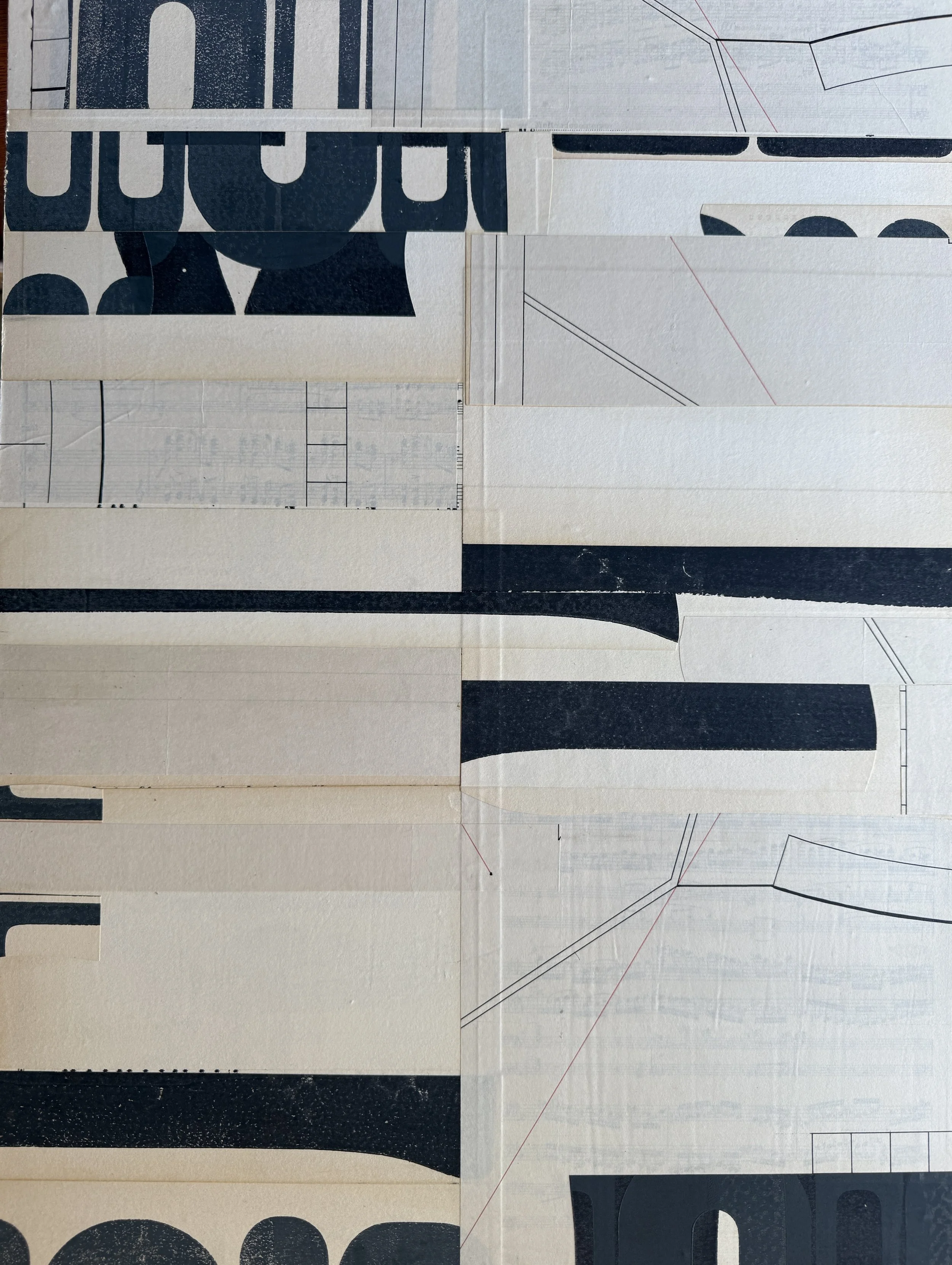
There’s another layer to my work, with the letterpress printing I do. If the papers already have marks, color, and type, why complicate the work with anything else?
Yes- it’s more storytelling.
Letterpress printing gave us the first books that didn’t have to be copied by hand.
Our cultures spread and developed because we could share ideas in these books. Imagine a printer handsetting letters and printing the pages of a book that will change the world. That still happens, but without the tactile immediacy of hand-set type.
Now, letterpress has become something fancy you might do for a wedding invitation or find in a set of greeting cards. Many letterpress printers have moved away from the hand-setting type to mechanically created plates, which allows for more complexity, but remove some of the beauty of the process.
It’s special to handle wooden letters, choose paint or ink colors, set up the press, and print—it’s tactile, auditory, and physical. The results, at least how I print, are surprising and energizing.
Using letterpress in my art, I can add color to vintage papers and abstract the letterforms into shapes I never imagined.
The layered prints engage the viewer with pieces like Fingerprints and Don’t Fold the Pages. It is puzzling to look at them and figure out how the clean layers of color were created. They couldn’t have been painted- so how were they made? And there’s the story- the story of the history of letterpress printing and how an artist found a way to use the battered, worm-eaten, dusty old letters, collected from around the world, and turn them into contemporary art.
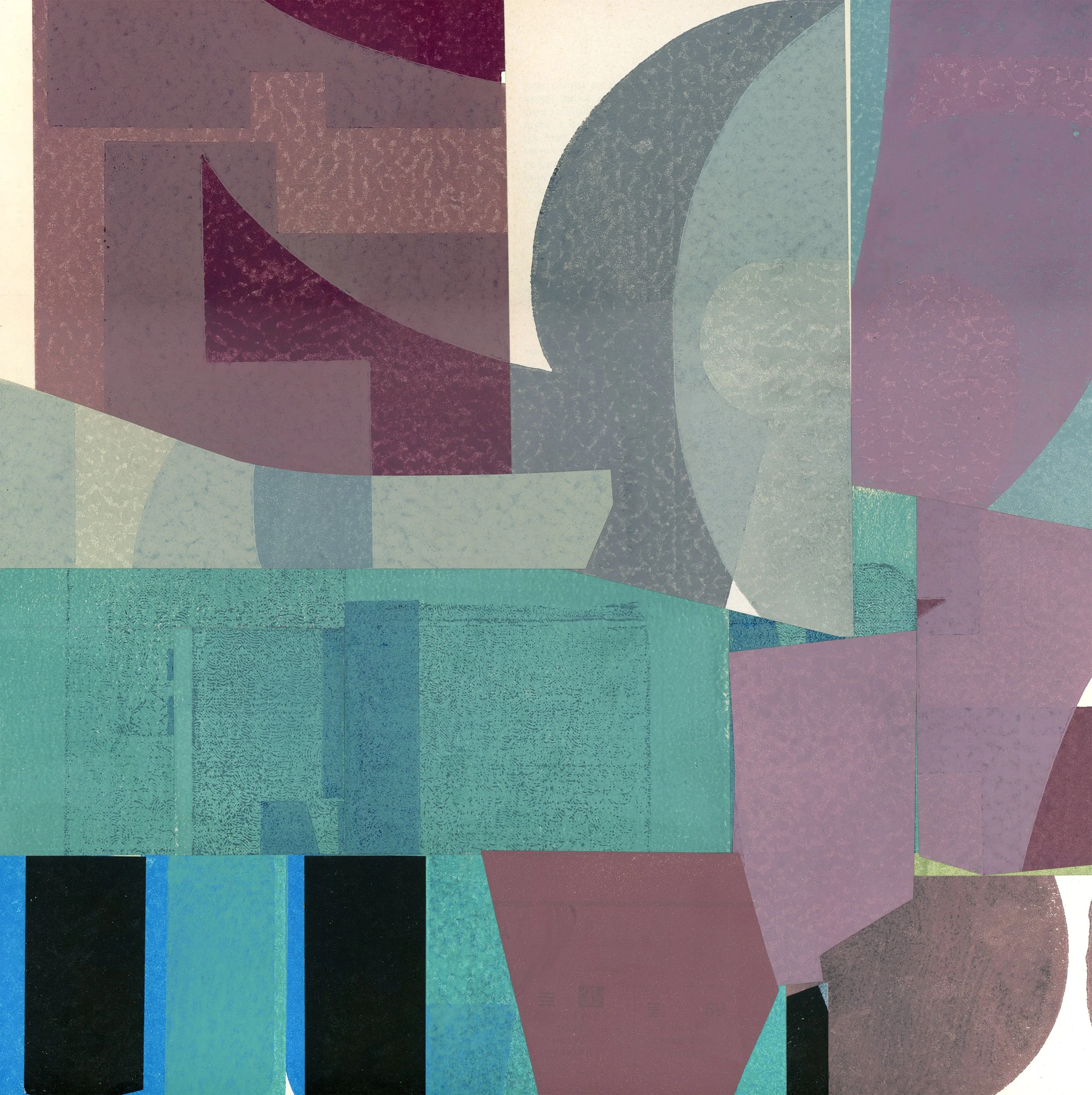
And I can’t help but add my stories to the pieces, both as I’m composing them and once they’re complete and ready for the world. The title “Fingerprints” came from the texture in some of the papers, reminding me of preschool art projects where my son’s little hands were pressed into poster paint and stamped onto construction paper for mother’s day cards.
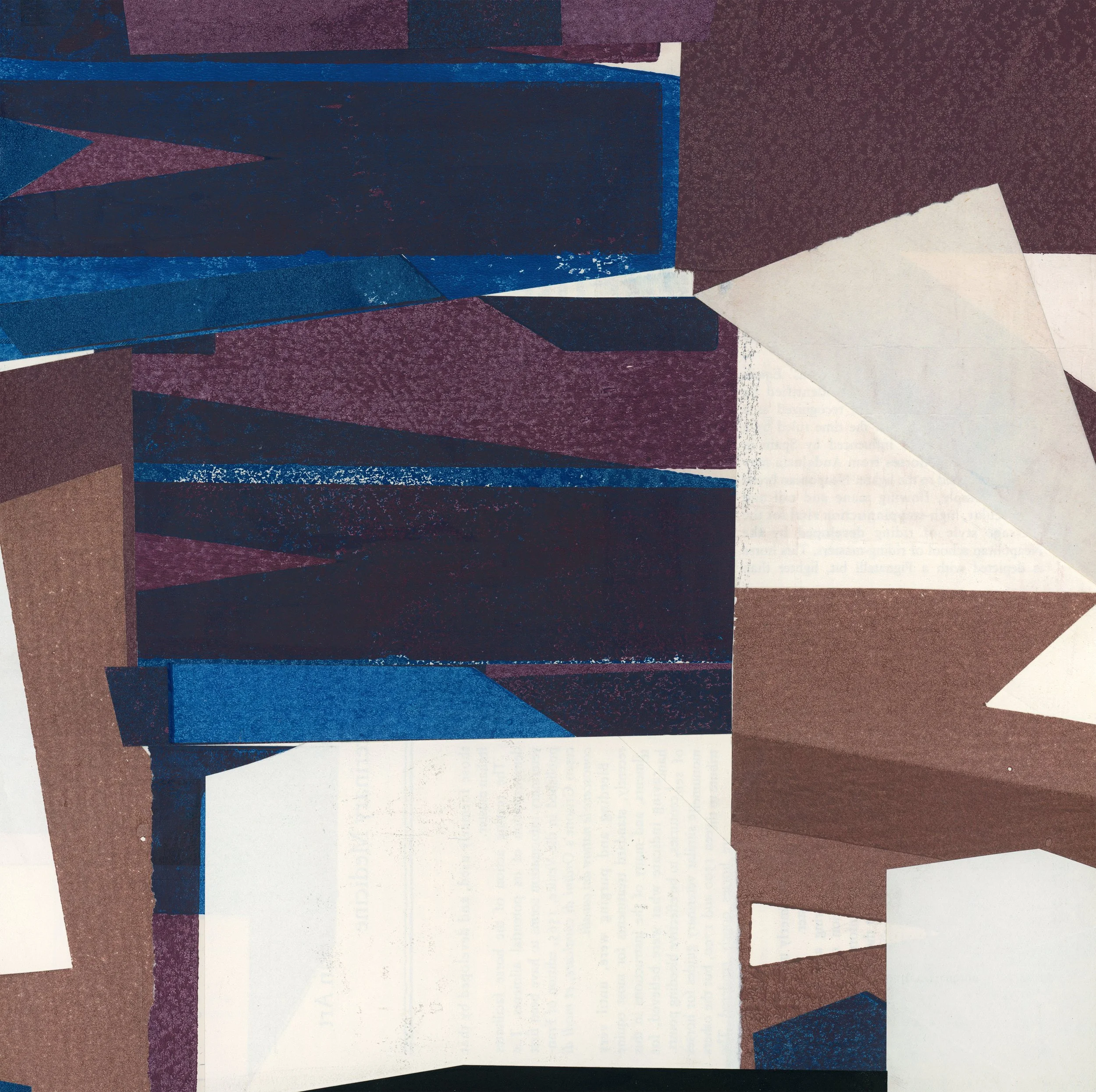
When I was a middle school teacher, I was constantly handing out bookmarks to my sixth graders, telling them not to fold the pages, which is the opposite of what I did in this piece when I folded over the corner of a book page. The title Don’t Fold the Pages reminds me of what I thought once mattered and how much I’ve changed.
And that brings me back to the beginning, to collecting materials. I leave the good wooden letters for the traditional printers, leave the antique books for collectors, and take in the worn-out, tired materials and figure out how to make something new. New art and new stories.
Some might ask if I'm destroying history. But I'm extending it, giving these forgotten voices a gallery wall instead of a landfill.
The boxes of paper from the estate sale? I’ll sit with her words and stories a bit longer, but I think they’ll be much better off in a work of art because who else besides another artist would have found value in a crumbling box of paper?
As you look at these collages, you’re continuing someone’s story, which could have ended in an estate sale dumpster. That’s something special- to have your words and marks on a gallery wall, long after you’re gone.
I invite you to look very closely at the collages, and look for the stories in layers of music, railroad ties, and the marks readers have left on the papers.