Dyeing Reclaimed Vintage Fabric
The Facebook Marketplace listing was for flat files, but I was interested in the giant hardcover books stored on top of them. I did a deep dive into the seller’s other listings, but the books weren’t for sale. Until a few weeks later, when they were delivered to my feed. Turns out they were old Rhode Island plat maps, no longer accurate, available for ten dollars each. I instantly made an appointment to pick them up, packed up my son and my niece, and headed to the city. I bought as many as I could, plus asked if I could take a bunch of paper out of the recycling bin (no charge for those). “If you end up with any extras, let me know.” He did, and we met in a Warwick parking lot, and I got even more of these massive books, for free.
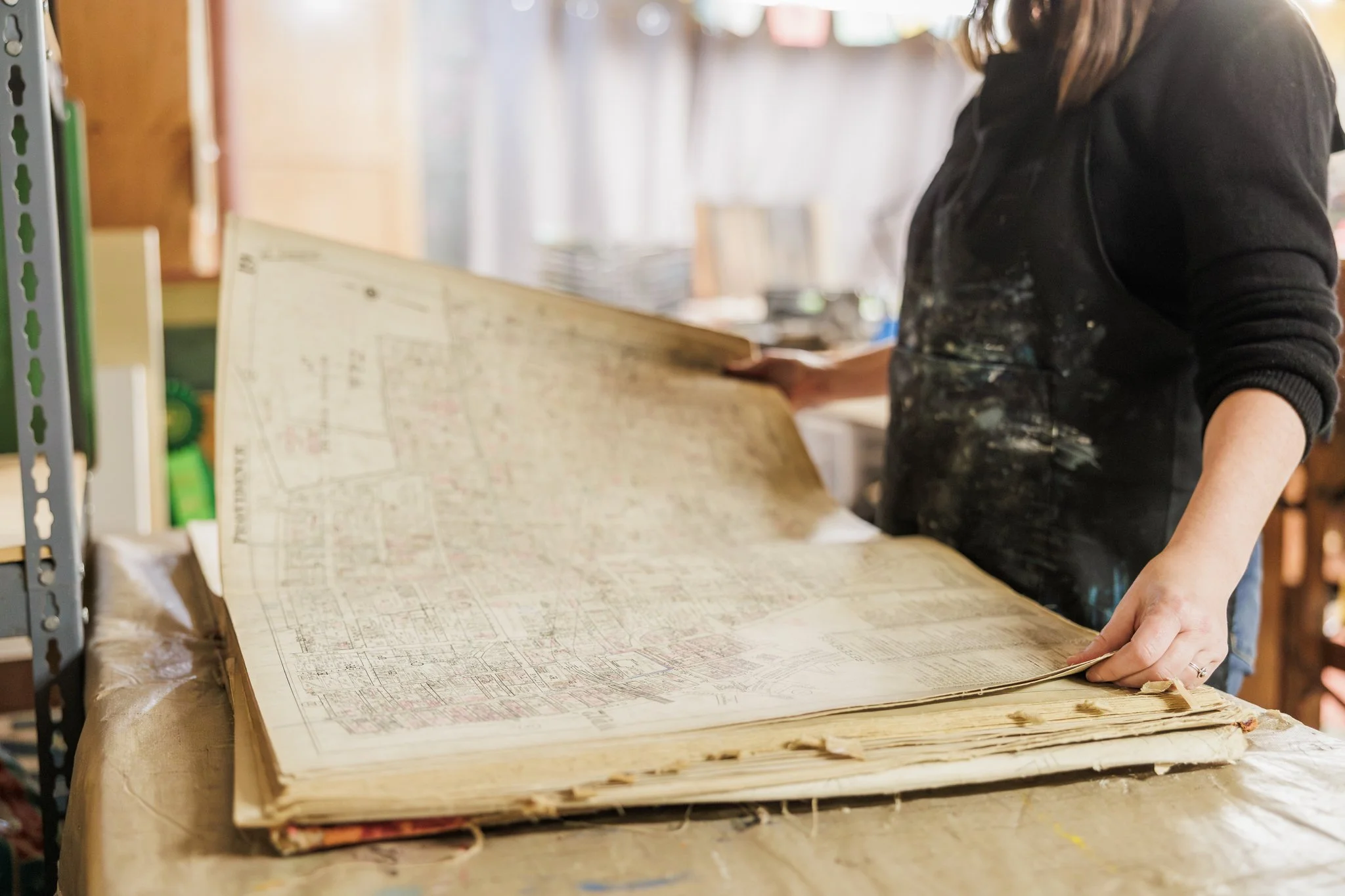
Me for scale!
As with any new material, there’s a learning curve. The maps were on very stiff, coated paper and backed with fabric, which I assumed was linen. One of the books was so old that the paper peeled away from the fabric, and that discovery solved all my problems. I could use them separately (soooo much material now!).
With the other books, I soaked the maps in a tub of water to dissolve the adhesive, then dried them on a laundry rack in the sunshine. This created a new problem: the linen often had stains and marks, which didn’t look good when I tried to use it in a composition.
I tried painting the fabric, but I didn’t like how the stiff, opaque pieces sat on the panels, especially when I added vintage papers to the composition. I wanted the airy, transparent linen look. When I shared this dilemma with my mother, a fabric and fiber artist, she instantly suggested dyeing the fabric with acrylic ink.
Here’s how to do it yourself using thin cotton or linen fabric:
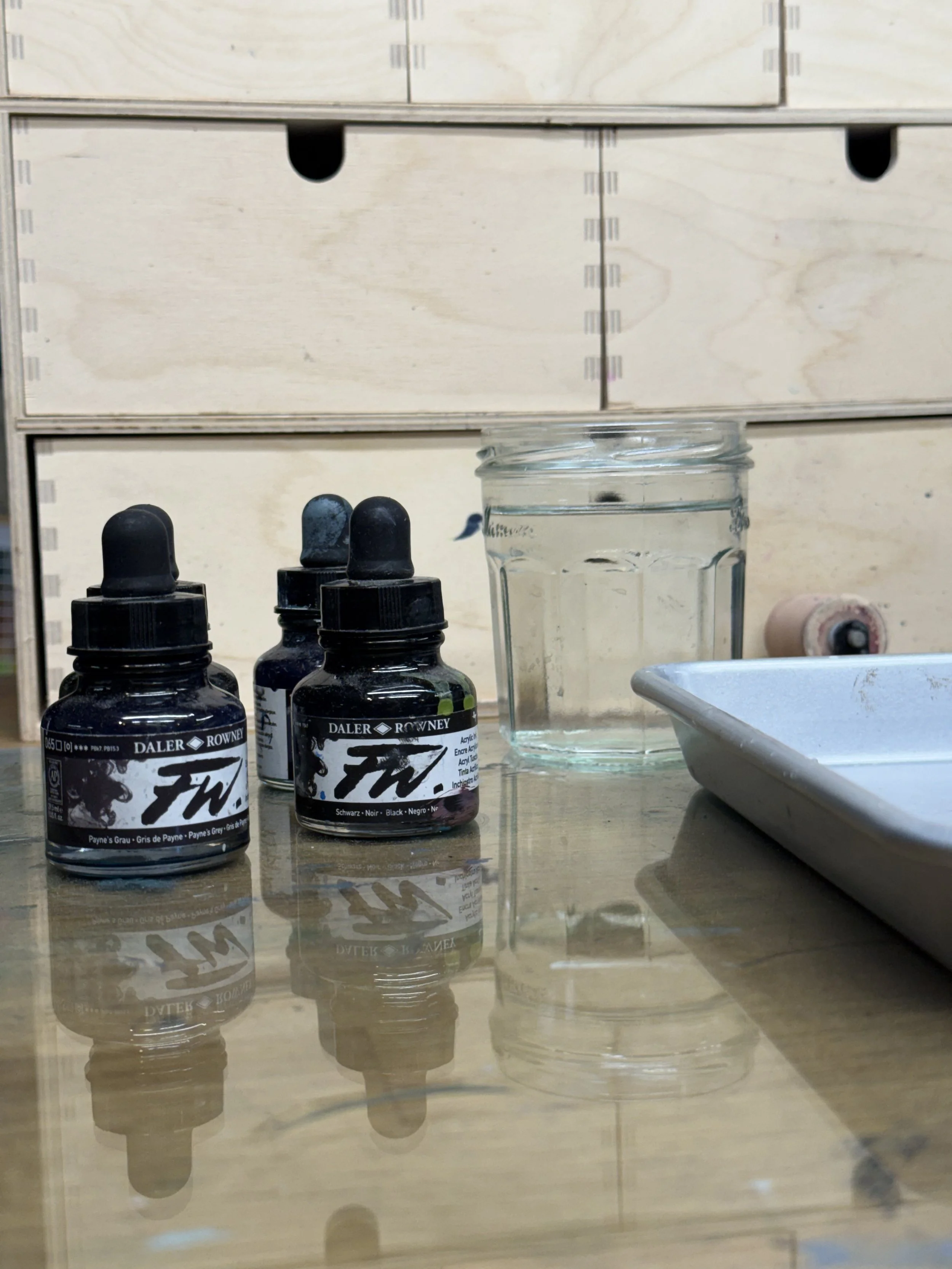
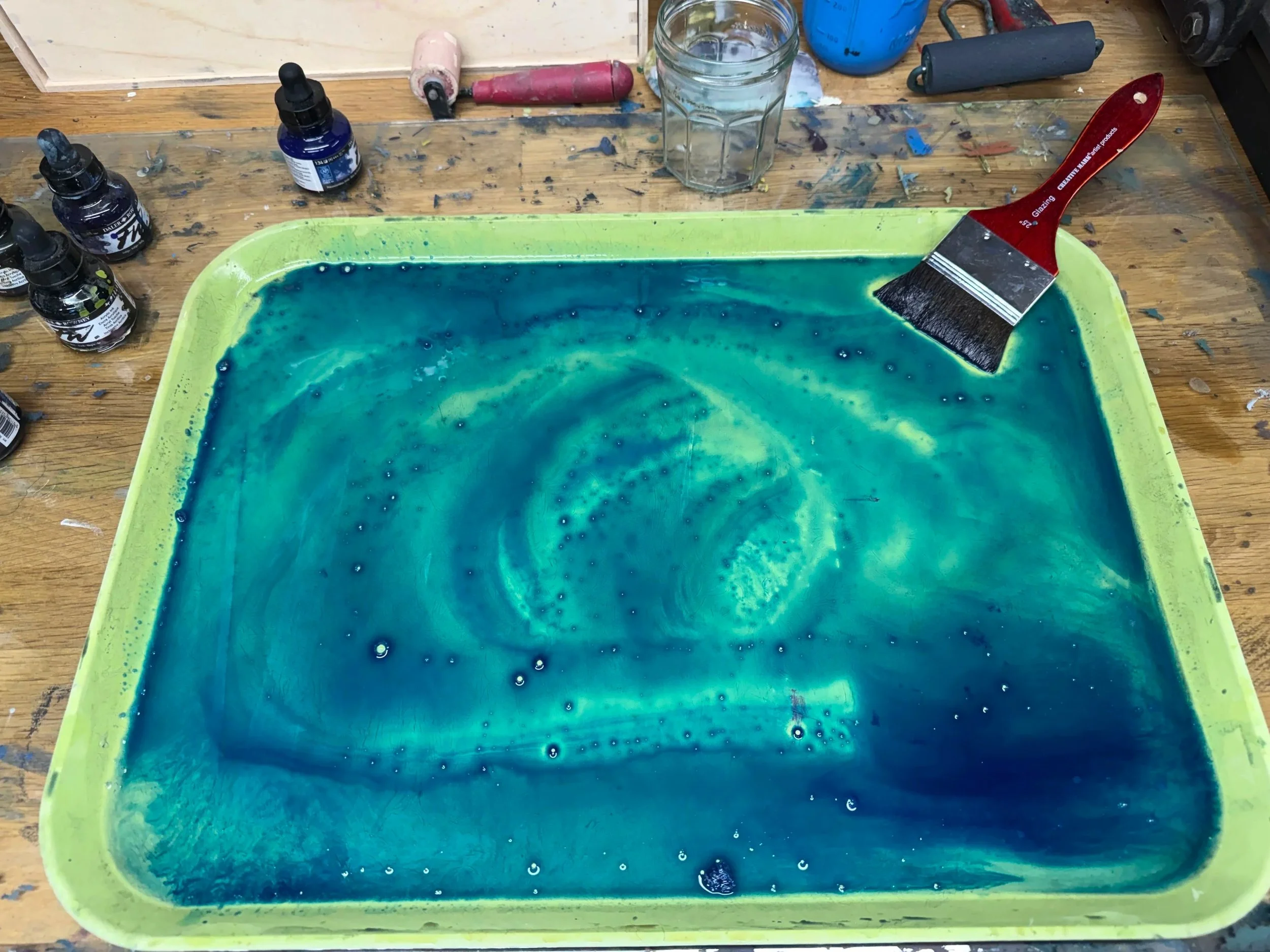
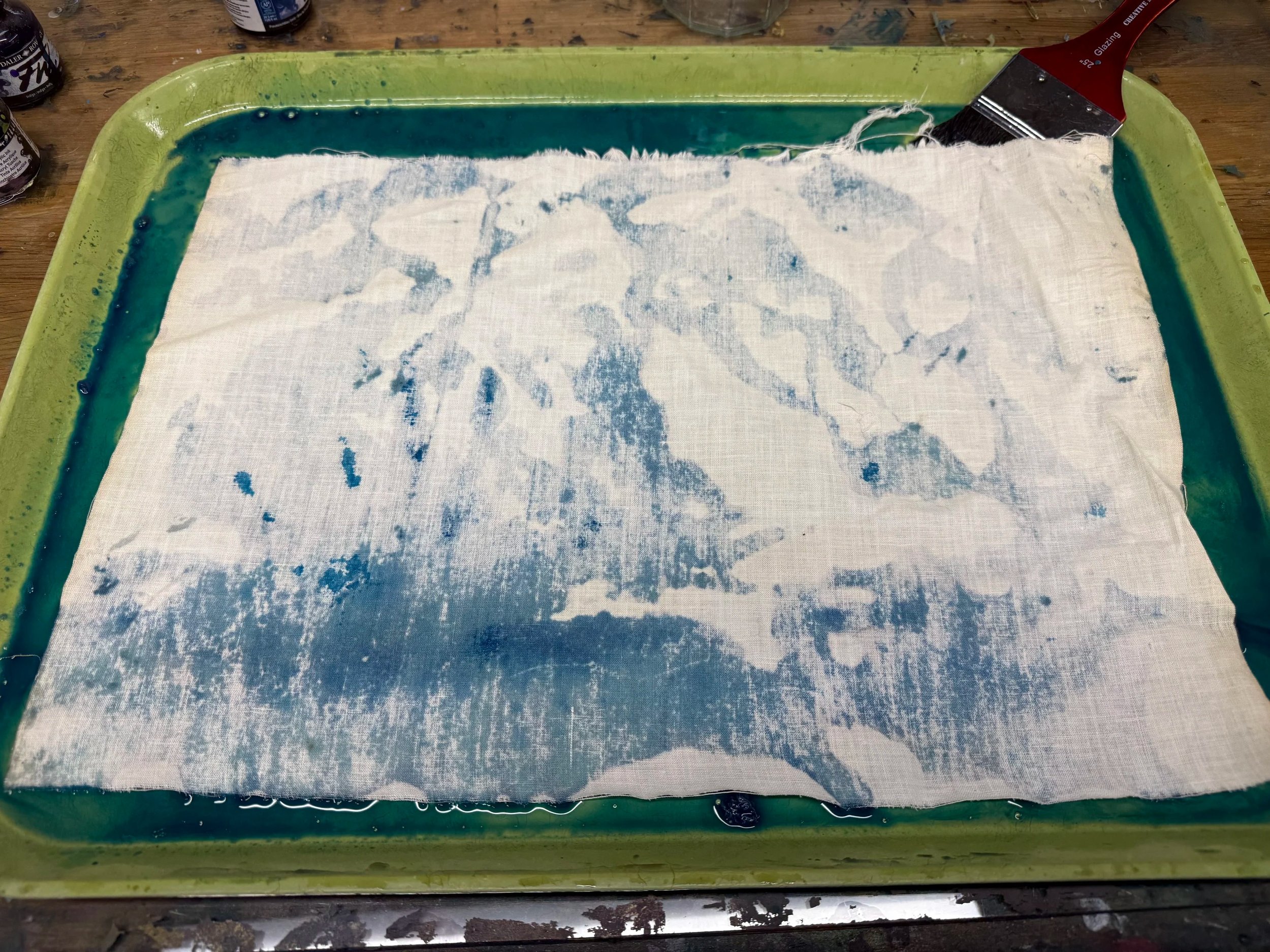
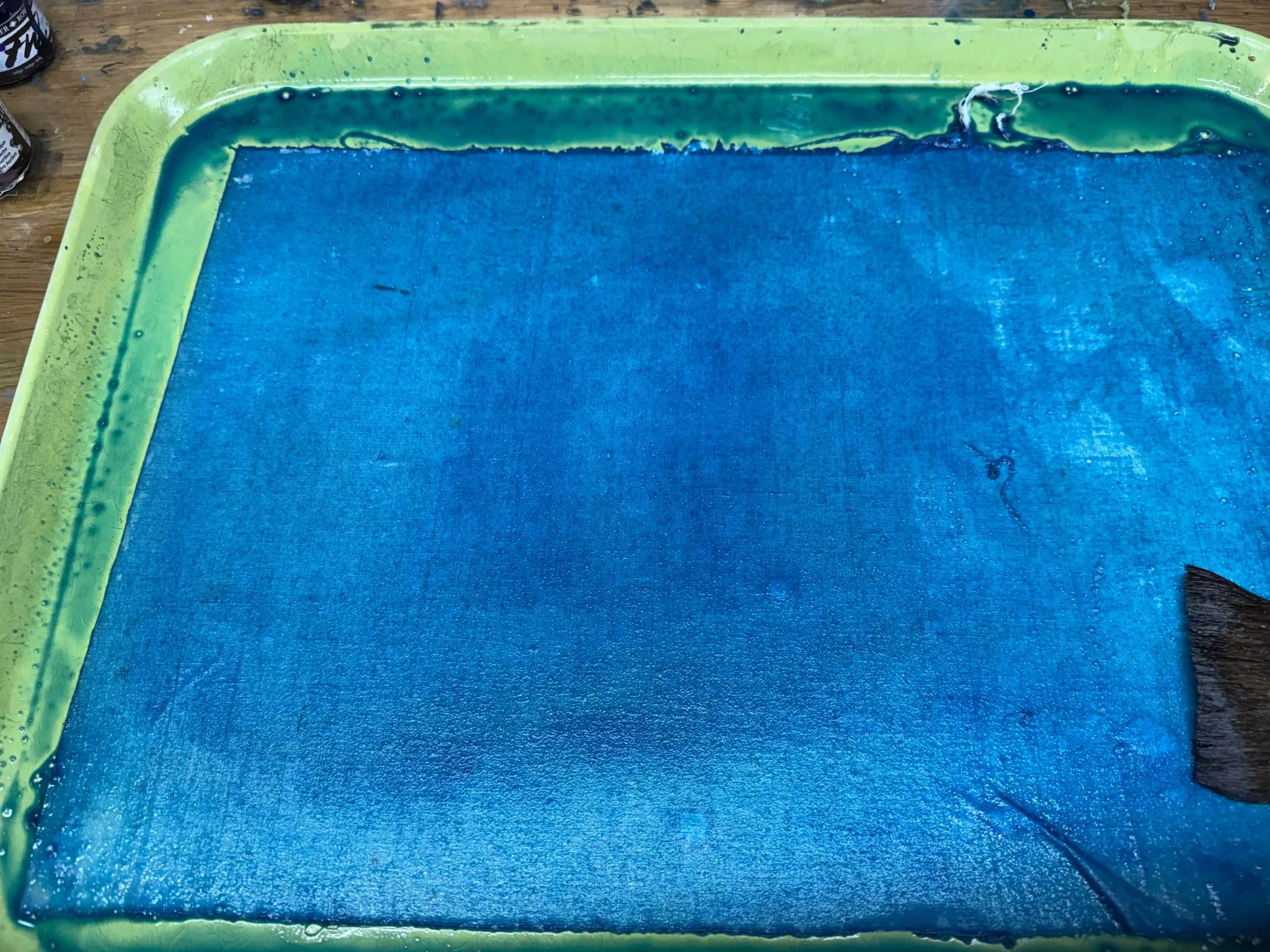
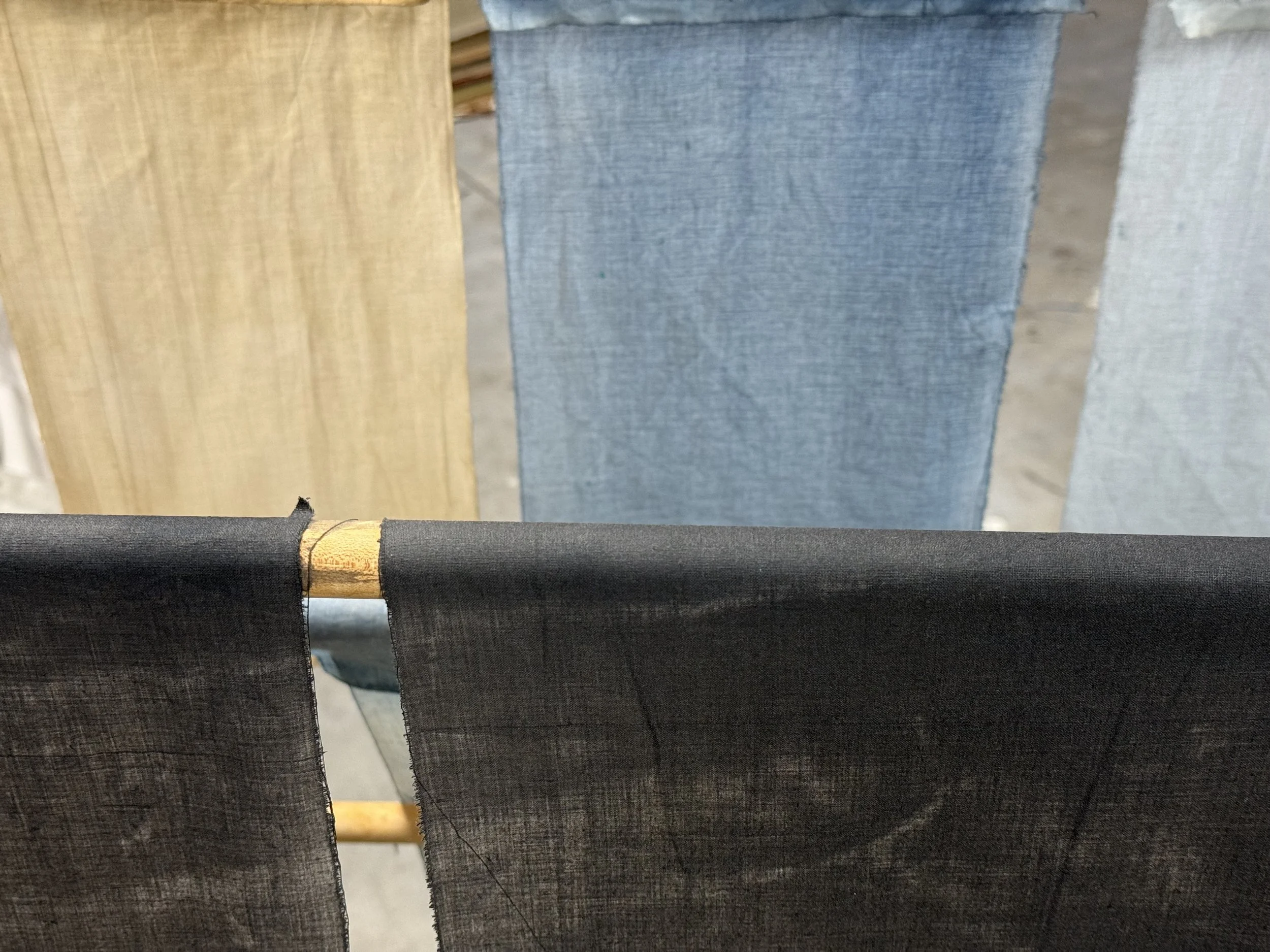
First, wet the fabric
In a shallow pan of water, large enough to lay the fabric flat, add the acrylic ink. The more you add, the darker your fabric will be.
Add the wet fabric (make sure you are wearing gloves) and let the dye bath absorb, using a paintbrush to push the color around and into the fabric. The color will lighten as it dries.
Squeeze out the excess water, and let the fabric dry on a laundry rack.
Once it’s dry, if you don’t like the color, repeat the process and overdye the fabric.
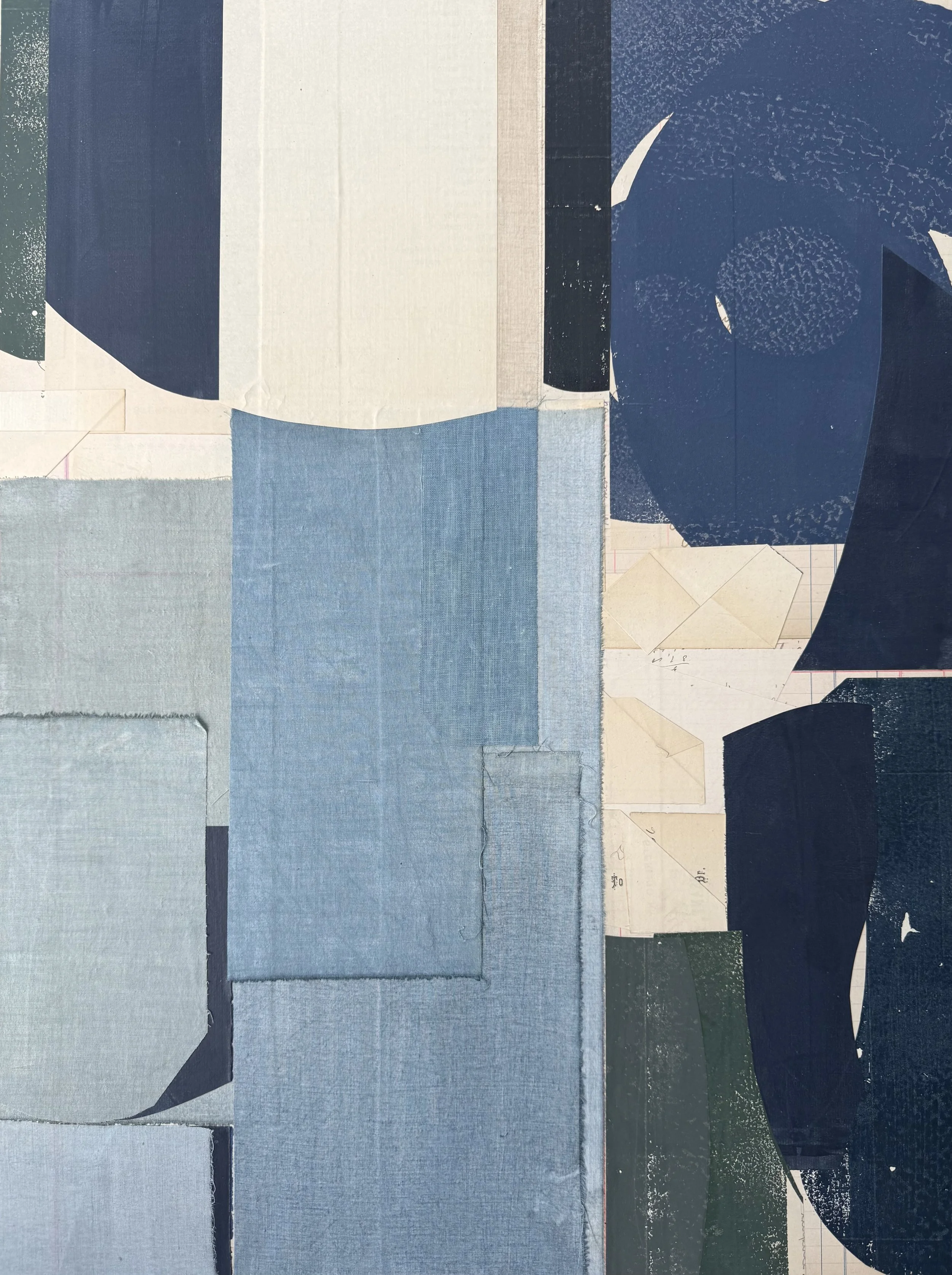
This is one of the pieces I’ve made using some of this fabric. It will be part of my show at Rart Gallerie in France this September.
© 2026, Sarah Z Short, Nineteen in January, 24” x 18”, Found paper and fabric and acrylic paint and ink
Curious about what to create with all your collage materials? Especially the odds and ends left behind from your experiments? Put them to use in your sketchbook.
This self-paced online course teaches you to make small sketchbook collages—not as a one-time project, but as a lasting habit. Using scraps from your studio floor, printing projects, bookstores, and estate sales, you'll create beautiful work that will influence your studio practice.